




What's Happening?
Representative Carlos Giménez (R-FL) has publicly endorsed potential U.S. military involvement concerning Cuba, following a CBS News report indicating that the U.S. Army Reserve is discussing Southern Command's resources for Cuba preparedness. President
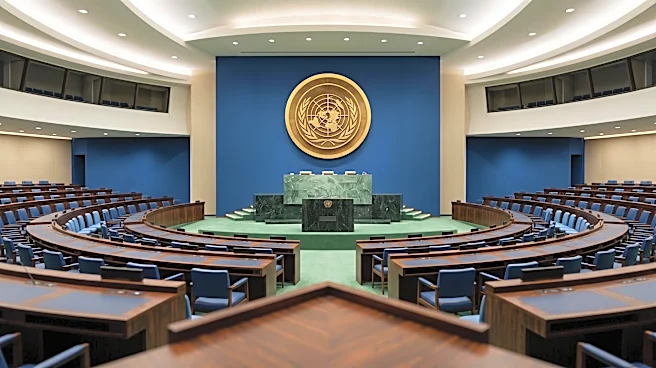
Trump recently labeled Cuba an 'absolutely failed state' at the United Nations, and a State Department report linked the Cuban government to far-left political activities in the U.S. The Cuban delegation walked out during President Trump's remarks. Representative Giménez, the only Cuban-born Member of Congress, expressed his full support on social media for 'any & all efforts to destroy the Communist regime in Havana' and to 'dismantle the regime that tramples on our people.' This comes amidst a hardline stance from President Trump and Secretary of State Marco Rubio against the communist-run country, particularly regarding an energy blockade.
Why It's Important?
This development is significant as it signals a potential escalation in U.S. policy towards Cuba, moving beyond economic sanctions and diplomatic pressure to possibly include military considerations. Representative Giménez's strong endorsement, as a Cuban-born lawmaker, adds a powerful voice to the call for regime change in Cuba, reflecting a segment of the Cuban-American community's long-standing desire for a free Cuba. Any U.S. military movement or intervention in Cuba would have profound implications for regional stability, international relations, and the lives of Cuban citizens. It could also reshape the political landscape in Florida, where Cuban-American voters are a significant demographic. The U.S. government's characterization of Cuba as a 'failed state' and its alleged ties to U.S. political activity further justify a more aggressive stance in the eyes of some policymakers, potentially leading to a more confrontational foreign policy.
What's Next?
The U.S. Southern Command has been contacted for comment, and their response will be crucial in clarifying the nature and extent of any 'Cuba preparedness' discussions. Further statements from the White House, Capitol Building, and the State Department will likely provide more insight into the administration's intentions. The international community, particularly Latin American nations, will be closely watching these developments, and any concrete steps towards military action could trigger significant diplomatic reactions. Domestically, this issue could become a prominent topic in political discourse, especially in states with large Cuban-American populations, influencing public opinion and potentially impacting future elections. The Cuban government's reaction to these statements and potential U.S. military considerations will also be a key factor in determining the trajectory of this evolving situation.
Beyond the Headlines
Beyond the immediate political and military implications, this situation touches upon deeper historical and ideological conflicts between the U.S. and Cuba. The rhetoric of 'destroying the Communist regime' evokes decades of Cold War-era tensions and the complex history of U.S. intervention in Latin America. The discussion of military options raises ethical questions about sovereignty, self-determination, and the potential for unintended consequences, including humanitarian crises or regional destabilization. The strong stance taken by Representative Giménez and President Trump also highlights the enduring influence of exile communities on U.S. foreign policy, particularly concerning their home countries. This could set a precedent for how the U.S. approaches other nations deemed 'failed states' or those with alleged ties to internal U.S. political issues, potentially shifting the balance between diplomacy and intervention in U.S. foreign policy.