
What's Happening?
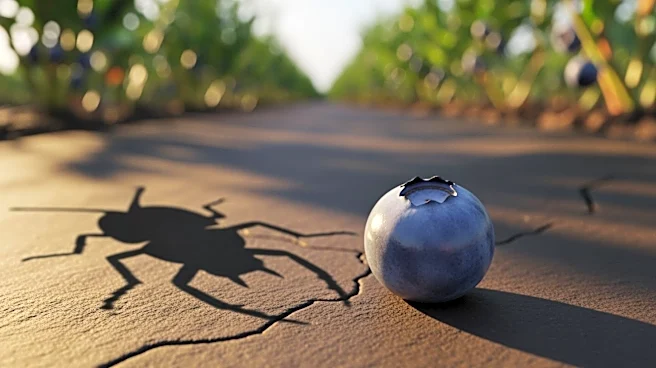
North Carolina's blueberry industry is facing a new threat from the Prionus imbricornus beetle, a longhorn beetle species recently documented to be feeding on blueberry bushes in the state. This discovery
marks the first time this beetle has been identified as a pest to blueberries in North Carolina, a state known for its significant blueberry production. The beetle's larvae, which can grow up to five inches long, are known to damage the roots of plants, potentially leading to significant crop losses. The findings were published in the Journal of Integrated Pest Management, highlighting the need for effective pest management strategies. Researchers have begun trials to identify suitable insecticides and optimal application timings to mitigate the beetle's impact.
Why It's Important?
The emergence of the Prionus imbricornus beetle as a threat to North Carolina's blueberry crops is significant due to the economic importance of blueberries to the state. North Carolina ranks as the sixth largest blueberry producer in the United States, with the industry valued at approximately $70 million. Protecting these crops is crucial for the state's agricultural economy and the livelihoods of farmers. The lack of currently labeled insecticides for this specific pest poses a challenge, necessitating urgent research and development of effective pest control measures. The situation underscores the broader issue of pest management in agriculture and the need for ongoing monitoring and adaptation to new threats.
What's Next?
Researchers, led by Lorena Lopez from NC State, are conducting insecticide trials to find effective solutions against the Prionus imbricornus beetle. These trials aim to identify insecticides that can be used during the beetle's reproductive cycles to limit larval development and prevent major root damage. The success of these trials could provide blueberry farmers with new tools to protect their crops. Additionally, the study's findings may prompt further research into pest management strategies for other crops potentially affected by similar beetle species.