





What's Happening?
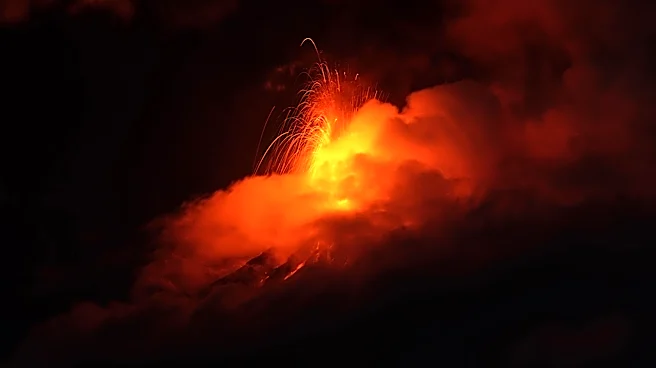
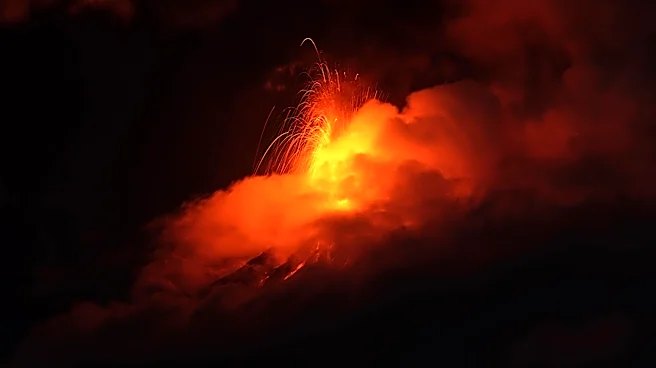
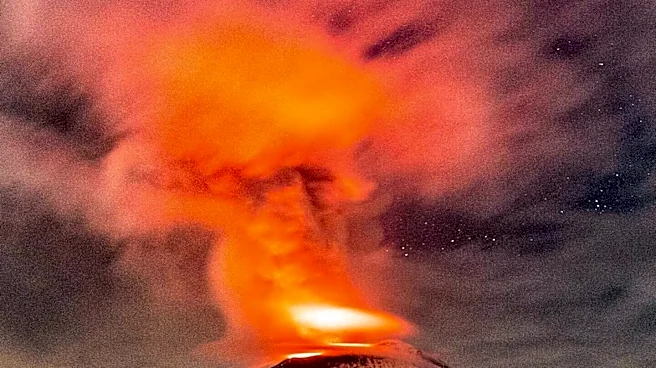
Guatemala's Fuego volcano has entered a critical explosive phase, prompting the evacuation of hundreds of people from nearby towns. The volcano, located about 50 kilometers southwest of Guatemala City, has been spewing lava and ash since Monday. Authorities
have evacuated at least 1,699 people as pyroclastic flows threaten surrounding areas. The ashfall has affected more than 29,000 people, with ash spreading up to 120 kilometers away. An alert has been issued to pilots due to ash affecting the airspace near the volcano. Despite the eruption, Guatemala's main international airport remains operational.
Why It's Important?
The eruption of the Fuego volcano poses significant risks to local communities and infrastructure. The evacuation of residents highlights the immediate threat to human life and the potential for widespread disruption. The ashfall can impact air travel, agriculture, and health, affecting both local and international stakeholders. The situation underscores the importance of disaster preparedness and response in regions prone to volcanic activity. The ongoing monitoring and response efforts by Guatemalan authorities are crucial in mitigating the impact of the eruption.
What's Next?
Authorities will continue to monitor the volcano's activity for the next 72 hours to assess the risk of further eruptions. Evacuation efforts and emergency response measures will remain in place to ensure the safety of residents. The government may issue additional alerts and advisories as the situation develops. International aid and support may be sought to assist with evacuation and recovery efforts. The impact on air travel and local infrastructure will be closely watched, with potential implications for tourism and economic activity in the region.