






What's Happening?
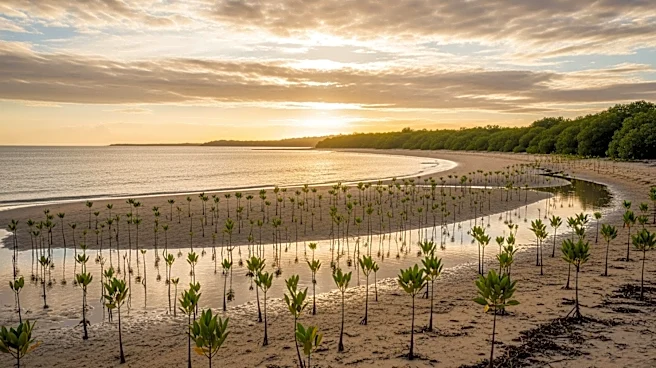
Costas Verdes, a Costa Rican nonprofit founded by Max Tattenbach, has successfully transformed deforested beaches along Costa Rica's Pacific coast into thriving ecosystems. The initiative began in 2009 when Tattenbach, a university student and surfer,
aimed to reforest Playa Hermosa to provide shade for beachgoers. Over time, the project expanded to include community-based reforestation efforts across 34 beaches, planting over 100,000 native trees. This effort has revived wildlife habitats and combated decades of deforestation caused by cattle farming. The project has seen the return of species such as howler monkeys and variegated squirrels to the reforested areas.
Why It's Important?
The reforestation efforts by Costas Verdes are significant for environmental conservation in Costa Rica. By restoring coastal forests, the project helps re-establish ecological corridors essential for species movement and ecosystem integrity. This initiative addresses the historical deforestation linked to cattle farming, which devastated coastal ecosystems. The success of Costas Verdes demonstrates the potential for grassroots efforts to contribute to large-scale environmental restoration, offering a model for similar projects worldwide. The involvement of local communities and volunteers highlights the importance of collective action in achieving sustainable environmental goals.
What's Next?
Costas Verdes aims to plant 300,000 trees across 100 beaches, expanding its reforestation efforts. The organization plans to raise $295,000 through donations, tree-planting tours, and merchandise sales to support this goal. Challenges include ensuring the active involvement of coastal communities and maintaining long-term commitment to the project. Despite these challenges, the success at Playa Guiones serves as a testament to the feasibility of restoring coastal forest ecosystems. The organization continues to seek funding and community engagement to sustain and expand its efforts.
Beyond the Headlines
The project by Costas Verdes highlights the broader implications of environmental restoration efforts. It underscores the importance of addressing historical land management practices that have led to ecological degradation. The initiative also emphasizes the role of community-driven projects in achieving conservation success, demonstrating how local involvement can lead to significant environmental change. Furthermore, the project serves as a reminder of the interconnectedness of ecosystems and the need for comprehensive strategies to restore and protect natural habitats.