


What's Happening?
The Rapid City Public Works Committee has approved the final report from the Railyard Relocation and Railway Configuration Study, endorsing recommendations to move the city’s downtown rail yard. This long-term plan aims to reshape rail traffic and eliminate
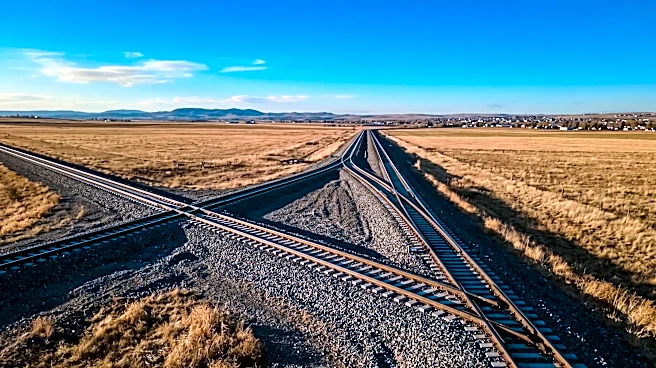
persistent driver delays across southeast Rapid City. The study was initiated partly due to the aging Campbell Street bridge, which spans the current rail yard and is nearing the end of its service life. Replacing this bridge is estimated to cost around $40 million, prompting officials to consider if these funds could be better utilized for relocating the rail yard. The proposed plan involves moving rail yard operations east of Box Elder, South Dakota, south of Interstate 90 along Highway 14-16 near Bandit Speedway. This new location is adjacent to an existing railroad transload facility, offering an opportunity to expand it into a full-service rail yard. Additionally, the plan recommends rebuilding a historic 'WYE' configuration at Pressler Junction near Third and Omaha streets, which was previously washed out by flooding and never reconstructed. This would allow trains to make turning movements more efficiently, reducing the need for them to travel deeper into the city to change direction.
Why It's Important?
This decision is significant for Rapid City as it addresses long-standing issues of traffic congestion and safety concerns related to rail operations within the city. The current configuration of the downtown rail yard contributes to frequent rail blockages, particularly along major routes like Saint Patrick Street, as trains often have to reverse direction within the city. By relocating the rail yard and rebuilding the WYE configuration, officials anticipate a significant reduction in train traffic through the city, from multiple trains daily to only a few runs per week. This will alleviate driver delays, improve traffic flow, and enhance public safety at numerous busy crossings. The project also presents an opportunity for economic development by expanding the rail transload facility near Box Elder, potentially creating new logistical efficiencies for businesses. The estimated cost of the full relocation and railway junction project is between $40 million and $80 million, representing a substantial investment in the city's infrastructure and future growth.
What's Next?
With the study now approved, Rapid City officials will begin coordinating with key stakeholders, including the South Dakota Department of Transportation, Rapid City, Pierre and Eastern Railroad, and the Federal Railroad Administration. These discussions will focus on crucial aspects such as project timing, funding mechanisms, and exploring potential federal grant opportunities to finance the estimated $40 million to $80 million project. While the plan has cleared a major initial hurdle, construction is still several years away. The next steps will involve detailed planning, securing necessary permits, and acquiring the substantial funding required for such a large-scale infrastructure project. Public engagement and further environmental assessments may also be part of the process as the project moves from conceptual approval to implementation. The goal is to ensure a smooth transition and minimize disruption during the relocation and reconstruction phases.
Beyond the Headlines
The relocation of Rapid City's rail yard signifies a broader trend in urban planning where cities are re-evaluating the integration of industrial infrastructure within growing metropolitan areas. This project highlights the complex balance between historical infrastructure, modern urban development, and community needs. The decision to invest in relocating the rail yard rather than solely replacing an aging bridge reflects a strategic shift towards long-term urban resilience and efficiency. It also underscores the increasing importance of inter-agency cooperation and federal funding in executing large-scale municipal projects. The reduction in train traffic through the city could also have environmental benefits, potentially lowering noise pollution and emissions in residential areas. Furthermore, the project could free up valuable downtown land for alternative development, contributing to urban revitalization efforts and potentially altering the socio-economic landscape of central Rapid City.