






What's Happening?
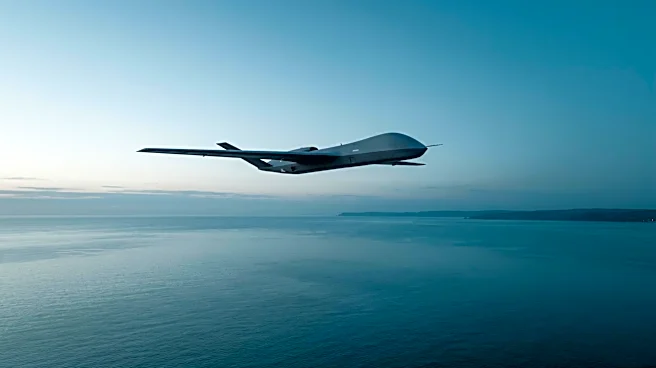
Overnight, Russian air defense systems intercepted and destroyed 53 Ukrainian unmanned aerial vehicles (UAVs) over various regions, including Crimea and the Black Sea. According to the Russian Ministry of Defense, 44 drones were neutralized over Crimea,
with others intercepted over the Black Sea and several Russian regions. These regions include Bryansk, Belgorod, Kaluga, Kursk, Ryazan, Tula, Moscow regions, and Krasnodar Krai. This large-scale drone attack represents a significant attempt by Ukrainian forces to target Russian territories and occupied areas. The incident highlights the ongoing intensity of the conflict and the persistent use of drone warfare by both sides.
Why It's Important?
This extensive drone attack underscores the escalating nature of the conflict and Ukraine's continued efforts to strike targets deep within Russian territory and occupied Crimea. For the U.S. and its allies, who provide military aid to Ukraine, these operations demonstrate Ukraine's capability to project force and disrupt Russian military and logistical operations. The sheer number of drones involved indicates a coordinated and significant offensive, testing Russia's air defense capabilities across multiple fronts. While Russia claims successful interception, the frequency and scale of such attacks suggest a sustained pressure campaign by Ukraine, aiming to degrade Russian military assets and infrastructure, and to bring the realities of the conflict closer to the Russian populace.
What's Next?
Further drone attacks from Ukraine are highly probable as part of its ongoing strategy to target Russian military and logistical assets. Russia will likely continue to bolster its air defense systems and implement countermeasures to mitigate future drone threats. The increased frequency and scale of these attacks could lead to further retaliatory strikes from Russia against Ukrainian targets. The international community will continue to monitor these developments closely, as they contribute to the overall escalation of the conflict and raise concerns about regional stability. Both sides are expected to adapt their tactics in response to these evolving drone warfare strategies.
Beyond the Headlines
The widespread nature of this drone attack, spanning multiple Russian regions and Crimea, signifies a strategic shift by Ukraine to extend the battlefield beyond traditional front lines. This tactic aims to create a sense of insecurity within Russia, disrupt its war economy, and potentially influence public opinion. For Russia, the need to defend such a vast area against numerous drones places significant strain on its air defense resources. The use of large swarms of drones also presents a complex challenge for conventional air defense systems, potentially overwhelming them. This development highlights the evolving nature of modern warfare, where asymmetric threats like drones can have a substantial psychological and material impact, even if many are intercepted. It also underscores the critical role of advanced air defense technology in contemporary conflicts.