

What's Happening?
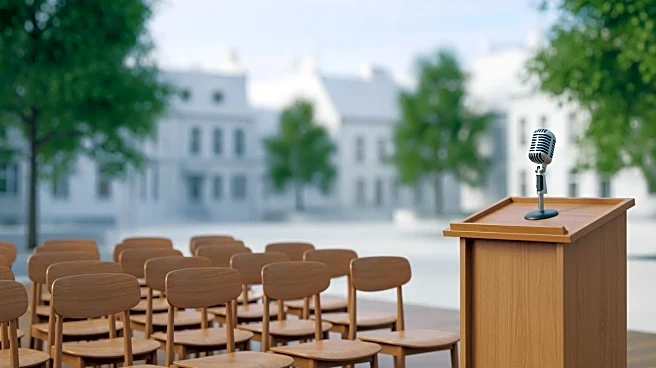
In Takoma Park, Maryland, Mayor Talisha Searcy's directive to prohibit clapping during a city council meeting has led to significant public backlash and debate. The order was issued during a meeting on February 11, 2026, as the council prepared to discuss
rent stabilization laws. The mayor's intention was to maintain civility and ensure the meeting proceeded smoothly without disruptions. However, the directive was met with resistance from attendees, who viewed it as an infringement on free speech. The situation escalated with attendees shouting accusations of dictatorship and undemocratic behavior. The incident has sparked discussions on civility and First Amendment rights, with some residents and experts questioning the necessity and legality of such a ban.
Why It's Important?
The controversy surrounding the no-clapping order highlights the ongoing tensions in public discourse and the challenges of maintaining decorum in civic meetings. It underscores the delicate balance between ensuring orderly proceedings and respecting individuals' rights to express support or dissent. The incident reflects broader national issues of polarization and the struggle to foster civil engagement in a divided political climate. The response from the community, including mockery and serious debate, illustrates the deep-rooted value placed on free expression and the potential consequences of perceived overreach by local authorities. This event may influence how other municipalities approach similar issues of public conduct and expression.
What's Next?
The debate over the no-clapping order is likely to continue, with potential implications for future council meetings and public engagement in Takoma Park. The incident has already prompted discussions among council members and the public about the appropriateness of such restrictions and the need for clear guidelines on public conduct. It may lead to policy reviews or adjustments to ensure that meetings remain both orderly and inclusive. Additionally, the incident could inspire other local governments to reevaluate their own rules regarding public participation and expression, potentially setting precedents for how civic discourse is managed across the country.
Beyond the Headlines
The incident in Takoma Park raises important questions about the role of local government in regulating public expression and the potential impact on democratic participation. It highlights the tension between maintaining order and allowing for robust public debate, a challenge faced by many communities. The situation also reflects broader societal issues of polarization and the need for spaces where diverse opinions can be expressed without fear of retribution. As communities navigate these challenges, the Takoma Park incident may serve as a case study in balancing civility with free speech, offering lessons for fostering constructive dialogue in a divided society.