




What's Happening?
Representative Brian Fitzpatrick, a Republican from Pennsylvania, is actively supporting bipartisan policymaking and has demonstrated a strong commitment to global health, national security, and American leadership on the world stage. He was notably one
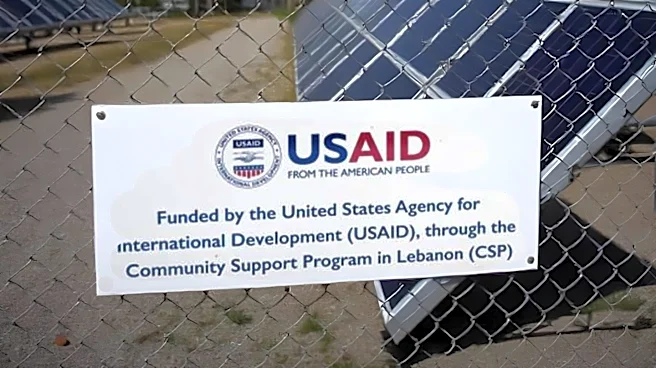
of only two House Republicans to vote against the dismantling of the United States Agency for International Development (USAID). Fitzpatrick's involvement extends to volunteering on his re-election campaign through the Alliance for American Leadership, where he emphasizes the importance of diplomacy and development. His stance highlights a belief in leaders who are willing to advocate for what is right, irrespective of strict party lines. This commitment to bipartisan efforts and international engagement positions him as a unique voice within his party, focusing on broader national and global interests.
Why It's Important?
Representative Fitzpatrick's advocacy for bipartisan policymaking is crucial in the current U.S. political climate, which is often characterized by deep partisan divisions. His willingness to vote against his party on issues like USAID funding underscores a commitment to institutional integrity and effective governance over strict party loyalty. This approach can foster more stable and predictable policy outcomes, benefiting various sectors, including foreign policy, humanitarian aid, and national security. By supporting USAID, Fitzpatrick helps ensure the continuation of programs that promote global stability, economic development, and public health, which in turn can prevent crises that might otherwise require more costly U.S. intervention. His emphasis on diplomacy and development also signals a preference for 'soft power' approaches, which can be more sustainable and cost-effective in advancing U.S. interests abroad compared to purely military solutions. This perspective is vital for maintaining U.S. influence and partnerships globally.
What's Next?
As Representative Fitzpatrick continues his re-election campaign, his focus on bipartisan policymaking and support for global initiatives like USAID will likely remain central to his platform. His efforts through the Alliance for American Leadership suggest a continued push for candidates who prioritize diplomacy and development. The outcome of his re-election will indicate the electorate's appetite for such bipartisan and internationally-minded leadership within the Republican party. Should he be re-elected, Fitzpatrick is expected to continue advocating for policies that strengthen global health, national security, and American leadership, potentially influencing legislative debates on foreign aid, international relations, and government spending. His continued presence could also encourage more moderate voices within Congress, potentially fostering greater cross-party cooperation on critical issues.
Beyond the Headlines
Representative Fitzpatrick's actions reflect a deeper tension within the Republican party regarding the role of international aid and multilateral engagement. His support for USAID, despite a faction within his party advocating for its reduction or elimination, highlights a philosophical divide between those who prioritize isolationist tendencies and those who believe in active global leadership. This internal struggle has significant implications for the future direction of U.S. foreign policy and its approach to global challenges. Furthermore, his emphasis on bipartisan policymaking challenges the growing trend of hyper-partisanship in Congress, suggesting a potential path towards more functional governance. His institutionalist perspective, which views the 'rule drama' as an 'inside baseball' issue detached from public concern, points to a broader critique of how internal congressional procedures can overshadow substantive policy debates, potentially eroding public trust in the legislative process.