



What's Happening?
Researchers at Washington University School of Medicine in St. Louis have identified a chemical compound that can clear harmful proteins from neurons, potentially offering a new treatment strategy for neurodegenerative diseases like frontotemporal dementia.
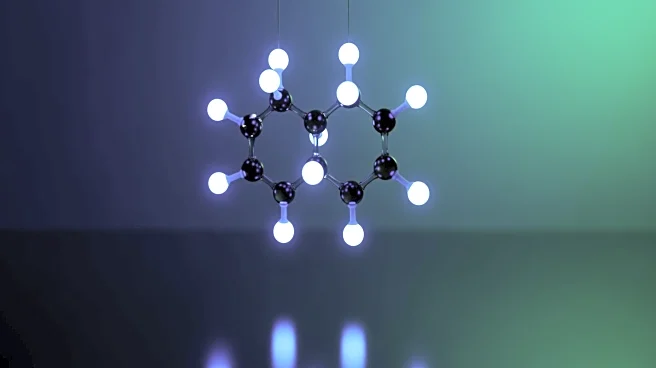
The study, published in Nature Communications, highlights the compound's ability to enhance autophagy, a cellular process that breaks down and recycles waste. This process is crucial as it declines with age, contributing to diseases such as Alzheimer's and frontotemporal dementia. The compound, known as G2, was shown to improve the clearance of misfolded tau proteins, which are implicated in these conditions, thereby preventing neuronal death.
Why It's Important?
The discovery of G2's effects on autophagy represents a significant advancement in the treatment of neurodegenerative diseases. By enhancing the body's natural waste disposal system, this compound could potentially slow or halt the progression of diseases characterized by protein misfolding and accumulation. This approach could complement existing therapies, such as those targeting amyloid beta in Alzheimer's, offering a multi-faceted treatment strategy. The research underscores the potential for autophagy-based therapies to address a range of age-related diseases, providing hope for improved outcomes in conditions that currently have limited treatment options.
What's Next?
The research team plans to further investigate the effectiveness of G2 in various models of tau mutations and different types of brain cells. This ongoing research could pave the way for clinical trials and eventually lead to new therapeutic options for patients suffering from neurodegenerative diseases. The potential for G2 and similar compounds to be used in combination with other treatments could revolutionize the approach to managing these complex conditions.