







What's Happening?
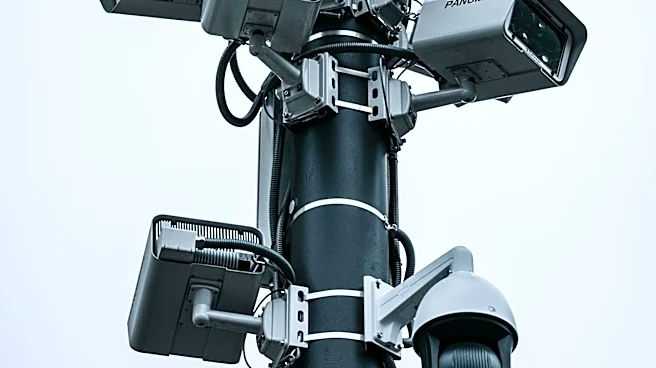
The St. Petersburg Police Department has refused to answer questions regarding its use of Flock Safety cameras, following a directive from the Florida Department of Transportation (FDOT) for local governments to remove automated license plate readers
from state rights-of-way within 30 days. This directive stems from Governor Ron DeSantis's concerns about privacy and the potential for large networks of cameras to track individuals without suspicion of crime. The St. Petersburg Police Department initiated a 25-camera pilot program in 2022, which later expanded to approximately 54 cameras after the City Council approved a five-year, $730,250 agreement. This expansion occurred without significant public debate or a vote from elected officials, as the contract was part of the consent agenda. Council Vice Chair Richie Floyd has since pushed for a closer examination of the surveillance system, and the City Council recently voted to send the Flock contract to the Public Services and Infrastructure Committee for review. Police Chief Anthony Holloway has defended the technology as an investigative tool, stating that officers monitor incidents, not people. However, concerns persist regarding data retention and potential misuse.
Why It's Important?
This development highlights a growing tension between public safety initiatives and privacy concerns in the U.S., particularly at the state and local levels. Governor DeSantis's intervention signifies a shift in the debate, moving it from local discussions to statewide action, which could set a precedent for other states grappling with similar issues. The St. Petersburg Police Department's silence on the matter, coupled with the City Council's decision to review the program, indicates internal and external pressures to address the implications of widespread surveillance technology. The situation also underscores the challenges of implementing new technologies without adequate public discourse and oversight, as the Flock program expanded significantly before facing substantial scrutiny. The outcome in St. Petersburg could influence how other Florida municipalities manage their license plate reader programs and may prompt a broader reevaluation of surveillance policies across the state, impacting civil liberties and law enforcement practices.
What's Next?
The St. Petersburg Police Department's next steps regarding its Flock camera program remain uncertain, as they have declined to comment on whether any of their cameras are located within state rights-of-way and if they will comply with the FDOT's directive. The City Council's decision to send the Flock contract to the Public Services and Infrastructure Committee for review suggests that a more thorough examination of the program is imminent. This review will likely address concerns about data retention, privacy, and the overall efficacy and necessity of the surveillance system. Current users of Flock technology, including St. Petersburg, must also decide whether to adopt Flock's recently recommended seven-day default data retention period, a change aimed at mitigating privacy concerns. The ongoing mayoral runoff in St. Petersburg, where the Flock program has become an election issue, could also influence the future of the cameras, with former Governor Charlie Crist advocating for a moratorium on expansion and Mayor Ken Welch defending their use as a public-safety tool.
Beyond the Headlines
The controversy surrounding the Flock camera program in St. Petersburg and the statewide directive from Governor DeSantis reveal deeper societal questions about the balance between security and individual privacy in an increasingly surveilled world. The rapid deployment of such technologies, often without extensive public debate or legislative approval, raises ethical concerns about algorithmic bias, potential for misuse, and the erosion of civil liberties. The lack of transparency from the St. Petersburg Police Department further exacerbates these concerns, fostering distrust between law enforcement and the community. This situation could lead to a broader legal and ethical reckoning regarding the deployment of AI-powered surveillance tools by government agencies. It also highlights the need for robust regulatory frameworks and public engagement to ensure that technological advancements serve the public good without infringing on fundamental rights. The outcome in Florida may influence national conversations about data governance, privacy rights, and the future of policing in the digital age.