



What's Happening?
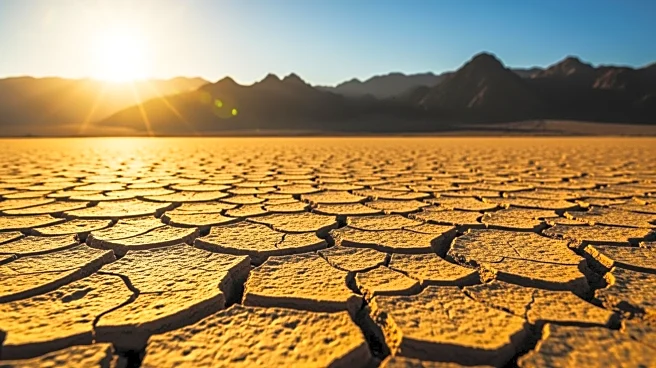
A severe water shortage warning has been issued for the Colorado River Basin, affecting approximately 40 million people across several states. The region is experiencing a dangerous stretch of extreme heat, which is accelerating the melt of an already
depleted mountain snowpack. This situation follows a winter with historically low snowfall, leaving the snowpack at roughly half of its normal levels. The Colorado River Basin, which includes states like Colorado, New Mexico, Wyoming, Utah, Arizona, California, and Nevada, is facing one of its most precarious positions on record. Water managers are preparing for a challenging season, with Denver Water reporting snowpack levels between 55% and 71% of normal. Lake Powell, a major reservoir, is expected to receive just 52% of its usual inflow, threatening its hydropower production.
Why It's Important?
The water shortage in the Colorado River Basin has significant implications for the region's water supply, agriculture, and energy production. The basin supports millions of people and is crucial for irrigation and hydropower. The ongoing drought and low snowpack levels could lead to severe water restrictions, impacting agricultural output and increasing water costs. Additionally, the potential cessation of hydropower production at Lake Powell could lead to higher energy prices and increased reliance on fossil fuels. This situation underscores the urgent need for sustainable water management practices and climate adaptation strategies to mitigate the impacts of climate change on water resources.
What's Next?
As the region braces for a challenging summer, water managers and policymakers are likely to implement additional drought response measures. The National Weather Service predicts above-average temperatures, which could exacerbate the situation. Stakeholders, including government agencies and local communities, may need to collaborate on long-term solutions to address water scarcity. This could involve investing in water conservation technologies, revising water allocation policies, and exploring alternative water sources. Public awareness campaigns may also be necessary to encourage water-saving practices among residents.