






What's Happening?
The Artemis II mission, carrying three American astronauts and one Canadian, is more than halfway to the moon, marking the first crewed lunar mission in over 53 years. The mission aims to surpass the distance record set by Apollo 13. However, the crew is facing
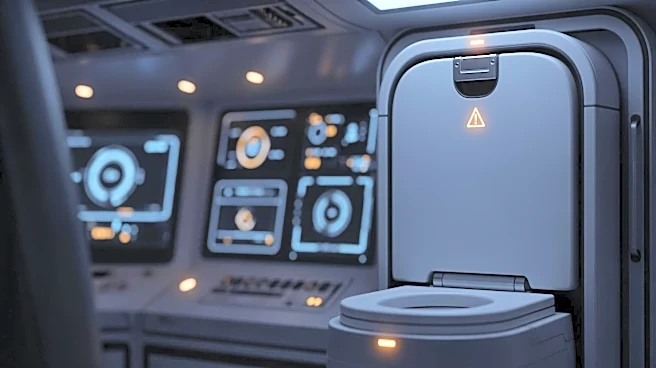
a challenge with the onboard toilet, which has malfunctioned since the launch. Engineers suspect that ice may be blocking the line, preventing proper flushing. Despite the issue, the astronauts are managing with backup urine collection bags. The mission is significant as it includes the first female and Black astronauts to travel to the moon, and the first non-U.S. citizen, Canadian astronaut Jeremy Hansen.
Why It's Important?
The Artemis II mission is a critical step in NASA's long-term goal of establishing a sustainable human presence on the moon. The mission's success could pave the way for future lunar landings and the development of a moon base. The inclusion of diverse astronauts highlights NASA's commitment to diversity and international collaboration in space exploration. The mission also serves as a test for new technologies and systems that will be crucial for future deep space missions, including those to Mars.
What's Next?
The Artemis II crew is expected to complete their lunar flyby and return to Earth with a splashdown in the Pacific Ocean. The mission's outcomes will inform the planning and execution of Artemis III, which aims to land astronauts on the lunar surface. NASA will continue to address technical challenges, such as the toilet malfunction, to ensure the success of future missions. The mission's progress will be closely monitored by international partners and the scientific community, eager to learn from the crew's observations and experiences.