







What's Happening?
A new report by Vivint, the 'How We Home Report,' indicates a significant shift in what U.S. homeowners expect from smart home technology. The report highlights that security and energy management are now the top priorities for consumers. Approximately
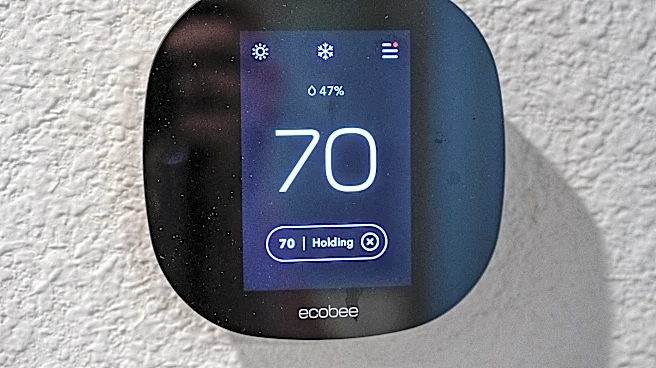
78% of homeowners own at least one smart home device, with 61% having purchased a new device in the past year. Popular devices include smart doorbells, security cameras, smart lighting, and smart locks. Homeowners are increasingly using these technologies to manage and reduce energy consumption, with 37% actively tracking their energy use through smart devices. Concerns about crime, economic conditions, and rising energy costs are driving these preferences. Nearly 6 in 10 homeowners have reported an increase in energy bills in the last year, and 63% are more concerned about energy expenses than five years ago. The study also found that 70% of Americans own up to 10 smart devices, including thermostats, security cameras, and pet feeders, indicating widespread adoption.
Why It's Important?
This trend signifies a maturing smart home market where practical benefits like safety and cost savings are outweighing novelty. For U.S. industries, this means a growing demand for integrated smart home systems that offer comprehensive security solutions and efficient energy management tools. Companies in the smart home sector will likely focus on developing more sophisticated and interconnected devices that address these core consumer needs. The emphasis on professional installation, desired by 80% of homeowners, also points to an opportunity for service providers to offer reliable setup and integration services, ensuring devices work together seamlessly. This shift could lead to increased investment in research and development for more robust security features and advanced energy monitoring systems, potentially driving innovation in areas like AI-powered home automation for predictive adjustments based on user habits.
What's Next?
The smart home market is expected to continue its growth trajectory, with manufacturers likely focusing on integrated platforms that combine security, energy management, and convenience. Consumers' desire for professional installation suggests a future where smart home solutions are not just product-based but service-oriented, with companies offering end-to-end solutions from purchase to setup and maintenance. We can anticipate further advancements in AI and machine learning to create more intuitive and adaptive smart home systems that learn user preferences and optimize energy usage autonomously. The increasing concern for family care, with 42% of homeowners expecting to care for a family member in the next five years, also indicates a potential rise in demand for smart home devices that offer remote monitoring and emergency alert capabilities, expanding the market beyond traditional security and energy functions.
Beyond the Headlines
The growing reliance on smart home technology for security and energy management raises important considerations regarding data privacy and cybersecurity. While nearly 3 in 4 homeowners trust smart devices with their privacy, the increasing collection of personal data—from daily routines to energy consumption patterns—necessitates robust data protection measures from manufacturers. The integration of AI into these systems, while offering enhanced convenience and efficiency, also brings ethical questions about autonomous decision-making within the home environment. Furthermore, the push for professional installation highlights a potential digital divide, where those who can afford expert setup may benefit more from advanced smart home capabilities, while others might struggle with complex installations, potentially limiting access to these evolving technologies.