






What's Happening?
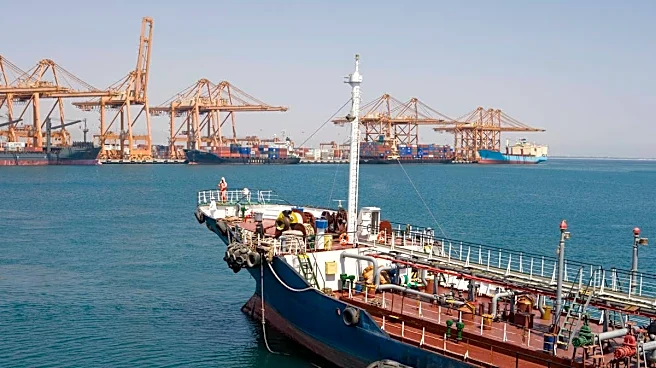
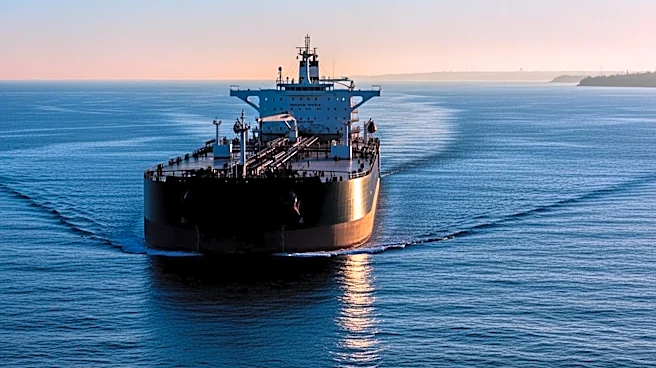
Commercial shipping through the Strait of Hormuz has seen a modest increase, with at least two non-Iranian supertankers exiting the Persian Gulf. This marks the first time in a week that significant volumes of unsanctioned crude have crossed the waterway.
The recent uptick in traffic comes amid ongoing military exchanges between the US and Iran, with both sides engaging in preemptive strikes and defensive measures. Despite these tensions, shipping flows have continued, albeit with disruptions and challenges in tracking vessel movements.
Why It's Important?
The Strait of Hormuz is a critical chokepoint for global oil and gas shipments, and any disruption in this region can have far-reaching effects on energy markets and global trade. The recent increase in tanker traffic suggests a temporary easing of restrictions, but the underlying geopolitical tensions pose a risk to the stability of energy supplies. The situation highlights the need for robust monitoring and contingency planning to ensure the continuity of trade in the face of geopolitical uncertainties.
What's Next?
The ongoing tensions between the US and Iran are likely to continue influencing shipping patterns and energy markets. Stakeholders will need to remain vigilant and responsive to changes in the geopolitical landscape, with potential implications for energy prices and supply chain logistics. Diplomatic efforts to resolve the conflict and ensure safe passage through the Strait of Hormuz will be crucial in maintaining global energy security.