
What's Happening?
Americans for Citizen Voting (ACV) has filed an emergency application with Justice Brett M. Kavanaugh, requesting that the U.S. Supreme Court order Michigan to include their proposed constitutional amendment
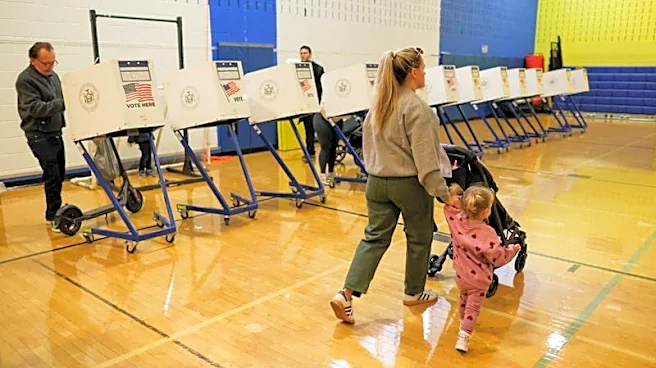
on the November ballot. The amendment seeks to mandate that Michigan voters prove their citizenship before casting ballots, eliminate the option for voters to sign an affidavit attesting to identity in lieu of a photo ID, and establish a state-funded hardship program for those unable to afford a photo ID. ACV argues that the Michigan Board of Canvassers' 2-2 deadlock on August 24 prevented the measure from advancing, despite the group collecting over 700,000 signatures, exceeding the required 446,198. The group also highlights significant delays by the Bureau of Elections in issuing its staff report, which took over five months after signatures were submitted. ACV is seeking an injunction by September 3, as Michigan's ballot must be finalized by September 4 for the November 3 general election.
Why It's Important?
This petition to Justice Kavanaugh underscores a critical national debate regarding voter identification laws and election integrity. If successful, the amendment in Michigan could set a precedent for other states considering similar measures, potentially influencing voter access and participation across the U.S. Proponents argue that such requirements are essential to prevent voter fraud and ensure that only eligible citizens vote. Conversely, opponents often contend that strict photo ID laws disproportionately affect minority groups, low-income individuals, and the elderly, who may face challenges in obtaining the necessary identification, thereby suppressing voter turnout. The outcome of this case could significantly impact the balance between election security and voter accessibility, shaping future electoral processes and potentially altering the demographic composition of the electorate in Michigan and beyond. The involvement of the U.S. Supreme Court highlights the national significance of state-level voting rights issues.
What's Next?
Justice Brett M. Kavanaugh has several options regarding the application from Americans for Citizen Voting. He may choose to act on the application himself, refer it to the full U.S. Supreme Court for consideration, or deny it without comment. ACV has emphasized the urgency of the situation, requesting an injunction by September 3, as the deadline for Michigan to finalize its November 3 general election ballot is September 4. If Kavanaugh or the full court grants the injunction, Michigan would be compelled to place the proposed constitutional amendment on the ballot. Conversely, if the application is denied or not acted upon in time, the measure will not appear on the November ballot. This decision will likely draw significant attention from voting rights advocates, political parties, and election officials, as it could influence similar efforts to modify voting laws in other states.
Beyond the Headlines
The legal challenge brought by Americans for Citizen Voting extends beyond the immediate issue of ballot access, touching upon fundamental questions of democratic participation and the role of the judiciary in electoral processes. The debate over voter ID laws often reflects deeper partisan divisions concerning trust in election systems and the balance of power. The group's complaint about the Michigan Bureau of Elections' five-month delay in processing signatures raises concerns about administrative efficiency and potential procedural hurdles that can impact citizen-led initiatives. Furthermore, the proposed amendment's requirement for photo ID and the elimination of affidavit options could intensify discussions about the definition of voter hardship and the state's responsibility to ensure equitable access to the ballot box. This case highlights the ongoing tension between ensuring election security and safeguarding the right to vote for all eligible citizens, a tension that continues to shape U.S. political discourse and legal battles.