






What's Happening?
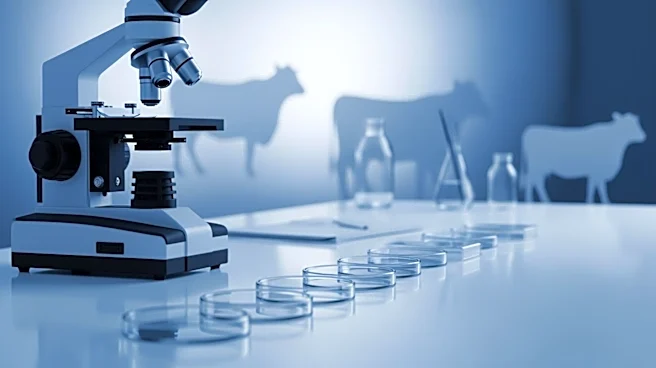
The United States Department of Agriculture (USDA) has inaugurated the Knipling-Bushland U.S. Livestock Insects Research Laboratory in Kerrville, Texas. This state-of-the-art facility is designed to enhance pest control efforts for the U.S. cattle industry
by developing advanced tools to manage invasive pests such as flies and ticks. The laboratory, covering 52,000 square feet, includes research spaces, cattle facilities, and a genomics center. It aims to study insect behavior, improve pest control techniques, and identify vulnerabilities in harmful species. The lab will also focus on developing new insecticides and better pesticide delivery systems. The USDA emphasizes the importance of protecting livestock from threats like the New World Screwworm, a pest previously eradicated in the U.S. using the Sterile Insect Technique. The new lab will continue this work with modern tools, supporting the cattle industry's safety and productivity.
Why It's Important?
The opening of this advanced research facility is crucial for the U.S. cattle industry, which faces ongoing threats from invasive pests. By equipping researchers with cutting-edge tools, the USDA aims to safeguard livestock health and ensure the industry's future productivity and profitability. The lab's work is expected to prevent economic losses associated with pest infestations and support the development of more effective pest control methods. This initiative aligns with broader efforts to protect American agriculture from invasive species, which can have significant economic and ecological impacts. The research conducted at this facility will not only benefit the cattle industry but also contribute to the overall resilience of U.S. agriculture against pest-related challenges.
What's Next?
The laboratory will continue to build on over 80 years of research in Kerrville, focusing on innovative pest control strategies. Researchers will likely collaborate with other agricultural and scientific institutions to share findings and develop comprehensive pest management solutions. The USDA may also engage with policymakers to ensure that the research outcomes are integrated into national agricultural policies. As the lab's work progresses, it could lead to the development of new regulations or guidelines for pest control in the livestock industry. Additionally, the facility's research may influence future funding and resource allocation for agricultural research and pest management initiatives.