






What's Happening?
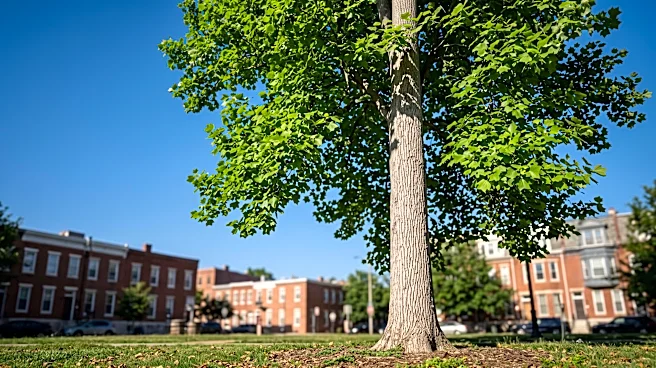
Baltimore has officially unveiled the Tuliptree as its new city tree, a decision made after nearly 2,000 residents participated in a public vote. This initiative, led by TreeBaltimore and the mayor's office, aims to adapt the city's urban forest to a changing
environment. The Tuliptree was selected from a shortlist of six climate-resilient tree species native to the region. Mayor Brandon Scott stated that the new official tree signifies Baltimore's commitment to fostering a more diverse and resilient urban forest capable of withstanding climate change, pests, and diseases. The previous official tree, the 'Chanticleer' pear or Callery pear, chosen in 1974, was found to be invasive and outcompeting native species. The Tuliptree will be incorporated into plantings across Baltimore's streets and parks starting in 2027.
Why It's Important?
This decision is significant for Baltimore's environmental strategy and urban planning. By selecting a climate-resilient and native species, the city is taking a proactive step to enhance its ecological health and biodiversity. The move away from an invasive species like the Callery pear demonstrates a commitment to correcting past ecological mistakes and promoting a healthier ecosystem. A robust urban forest provides numerous benefits, including improved air quality, reduced urban heat island effect, enhanced stormwater management, and increased green spaces for residents. The public's involvement in the selection process fosters community engagement and ownership in environmental initiatives, which is crucial for the long-term success of such programs. This initiative positions Baltimore as a leader in sustainable urban development and climate adaptation.
What's Next?
Starting in 2027, the Tuliptree will be actively integrated into Baltimore's urban landscape through various planting programs in streets and parks. TreeBaltimore and the city's forestry team will likely develop educational campaigns to inform residents about the benefits of the Tuliptree and the importance of urban forestry. The success of this initiative could inspire other U.S. cities to re-evaluate their official tree designations and urban forestry strategies, particularly concerning climate resilience and native species promotion. Ongoing monitoring of the Tuliptree's growth and its impact on the local ecosystem will be crucial to ensure the long-term effectiveness of this environmental effort. The city may also explore further public engagement opportunities for future environmental projects.
Beyond the Headlines
The selection of the Tuliptree goes beyond a simple aesthetic choice; it reflects a deeper understanding of ecological principles and the long-term health of urban environments. The shift from an invasive species to a native, climate-resilient one highlights a growing awareness of the interconnectedness of urban development and natural ecosystems. This move can be seen as part of a broader national trend towards 'green infrastructure' and nature-based solutions to urban challenges. Ethically, it represents a commitment to environmental stewardship and a recognition of the city's responsibility to future generations. Culturally, it could foster a renewed appreciation for native flora and the unique ecological identity of the region, potentially influencing local art, education, and community pride. It also underscores the importance of scientific input in public policy decisions, particularly in environmental matters.