







What's Happening?
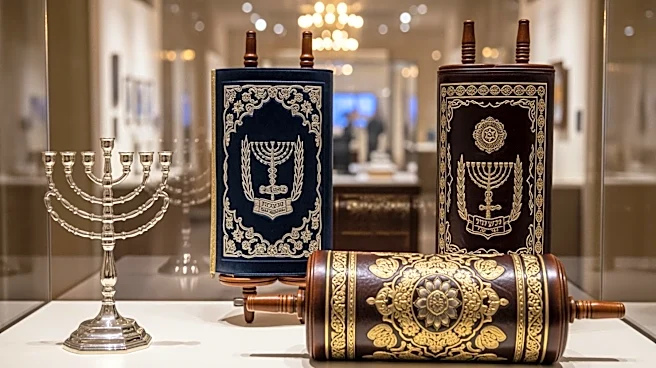
Deborah Brodie, a Maryland teacher, amassed a collection of over 200 Jewish ritual objects over 35 years, which she used as educational tools for her Hebrew school students with special needs. Following her death, her daughter Rae Ann Kaylie faced the
challenge of preserving this collection. The collection, which includes menorahs, seder plates, and a Torah, was initially overwhelming for Kaylie. However, through social media outreach, the collection found a new home at the Lillian and Albert Small Capital Jewish Museum. The museum plans to use the collection for educational purposes, allowing visitors to interact with the items as Brodie intended.
Why It's Important?
The relocation of Brodie's collection to a museum highlights the importance of preserving cultural heritage and educational resources. This move ensures that Brodie's legacy of Jewish education continues, providing a hands-on learning experience for future generations. The museum's decision to house the collection underscores the value of community engagement and the role of social media in connecting individuals with institutions that can preserve and honor personal legacies. This development also reflects broader trends in how cultural artifacts are preserved and utilized for educational purposes.
What's Next?
The Capital Jewish Museum plans to photograph the collection for online access and lend pieces to local schools and organizations. This initiative will expand the reach of Brodie's educational impact, allowing more people to engage with Jewish cultural artifacts. The museum's efforts to honor Brodie's memory through educational programming may inspire similar initiatives in other communities, promoting the preservation of cultural heritage. Additionally, the museum's actions could encourage individuals with similar collections to consider donating them for public benefit.
Beyond the Headlines
This story highlights the potential of social media as a tool for cultural preservation and community building. The successful relocation of Brodie's collection demonstrates how digital platforms can facilitate connections between individuals and institutions, leading to meaningful outcomes. It also raises questions about the future of personal collections and the role of museums in preserving individual legacies. As more people turn to social media for solutions, this case may serve as a model for others seeking to preserve cultural artifacts.