



What's Happening?
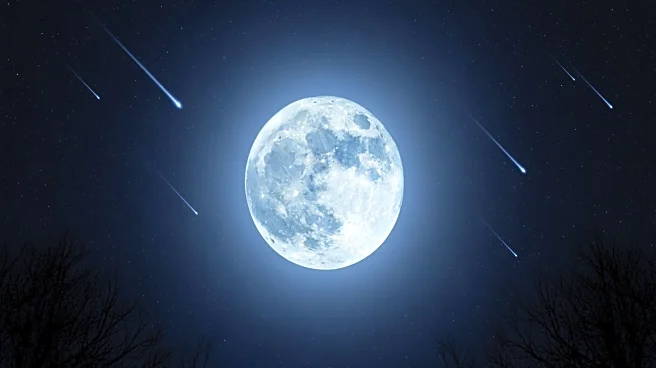
The first full moon of 2026, known as the wolf moon, will coincide with the Quadrantid meteor shower, creating a celestial spectacle. The wolf moon, a supermoon, will appear larger and brighter as it reaches peak illumination on January 3. However, its
brightness will make observing the Quadrantid meteor shower challenging. The Quadrantids, peaking from 4 to 7 p.m. ET on January 3, are best viewed from midnight to dawn on January 4. Despite the full moon's interference, observers might still see up to five meteors per hour. The Quadrantids are known for bright fireballs, though visibility in North America may be limited.
Why It's Important?
This celestial event highlights the interplay between lunar phases and meteor showers, offering a unique opportunity for skywatchers. The wolf moon's brightness poses challenges for meteor observation, emphasizing the need for strategic viewing locations. The event also underscores the cultural significance of full moons, with names derived from Native American traditions. The Quadrantid meteor shower, though less visible this year, remains a key event for astronomers and enthusiasts, fostering interest in astronomy and celestial phenomena.
What's Next?
Following the Quadrantids, skywatchers can look forward to the Lyrid meteor shower in April. The full moon cycle continues with various named moons throughout the year, each offering unique viewing experiences. NASA's upcoming Artemis II mission, set to send astronauts around the moon, adds to the excitement surrounding lunar observations. As the year progresses, public interest in astronomy is likely to grow, with more opportunities for education and engagement.
Beyond the Headlines
The wolf moon and Quadrantid meteor shower highlight the cultural and scientific importance of celestial events. They encourage public engagement with astronomy and foster a deeper appreciation for the natural world. The event also serves as a reminder of the challenges posed by light pollution and the importance of preserving dark skies for astronomical observations. As people gather to observe these phenomena, it fosters a sense of community and shared wonder.