
What's Happening?
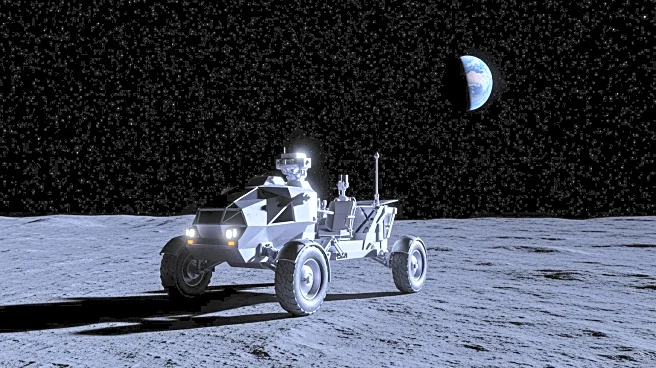
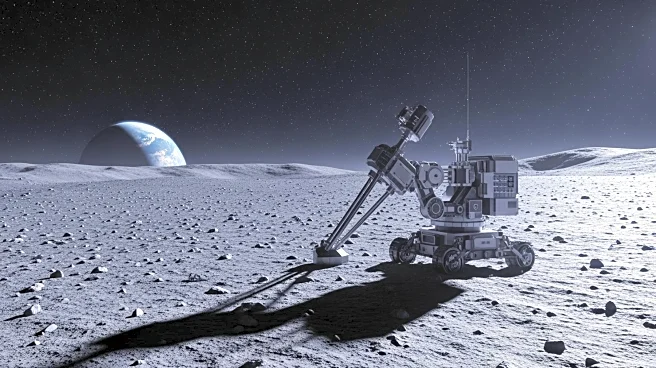
The race to mine the Moon is intensifying as private companies and national space agencies advance their plans to extract valuable resources from the lunar surface. Seattle-based startup Interlune, in collaboration
with Vermeer, has developed a prototype electric excavator capable of processing up to 100 metric tons of lunar soil per hour, focusing on extracting helium-3, a potential energy source for nuclear fusion. Interlune plans a mission in 2027 to locate helium-3 concentrations, followed by a pilot mining plant in 2029. Other companies, such as Astrobotic and Intuitive Machines, are also preparing missions to analyze lunar soil and rock. However, the international legal framework governing space exploration remains outdated, with the 1967 Outer Space Treaty and the 1979 Moon Agreement lacking enforcement tools and clear benefit-sharing rules. This legal ambiguity raises concerns about potential conflicts and environmental impacts on the Moon.
Why It's Important?
The push for lunar mining has significant implications for the future of space exploration and resource utilization. The extraction of helium-3 and other lunar resources could revolutionize energy production on Earth, potentially providing a clean and abundant energy source. However, the lack of a clear legal framework poses risks of disputes and conflicts over resource claims, as lunar resources are not evenly distributed. The absence of comprehensive international agreements could lead to operational interference and environmental degradation on the Moon, affecting scientific research and the lunar environment. The situation underscores the need for updated and enforceable international space laws to manage the growing interest in lunar mining and ensure that space exploration benefits all of humanity.
What's Next?
As more missions are planned, the potential for disputes over lunar resources is likely to increase. The European Space Agency's zero-debris charter, which aims to be formalized by 2030, reflects a growing recognition of the need to address these challenges. Meanwhile, countries like the U.S., Luxembourg, Japan, and the UAE have passed laws allowing companies to extract space resources, adding to the complexity of the legal landscape. The non-binding Artemis Accords, launched by the U.S. in 2020, provide voluntary principles for space exploration, but the lack of binding international agreements continues to create uncertainty. The international community may need to prioritize the development of a comprehensive legal framework to govern lunar mining and ensure sustainable and peaceful exploration of space.
Beyond the Headlines
The drive to mine the Moon highlights broader ethical and environmental considerations in space exploration. The potential disruption of lunar science and the Moon's environment raises questions about the long-term impacts of human activities in space. As technological advancements make lunar mining more feasible, the international community must balance the pursuit of economic and scientific benefits with the preservation of the lunar environment. The situation also reflects broader geopolitical dynamics, as countries and companies vie for leadership in space exploration. The outcome of these efforts could shape the future of international cooperation and competition in space.