







What's Happening?
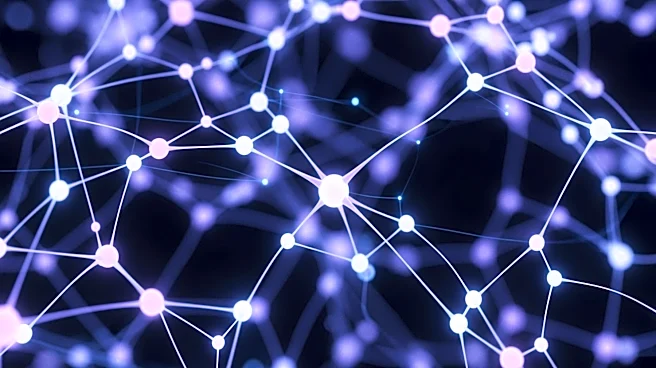
Researchers have identified a new type of neuroplasticity, known as behavioral time scale synaptic plasticity (BTSP), which allows the brain to rewire itself after a single experience. This discovery was made by observing dendritic activity in the hippocampus,
a region of the brain associated with memory and learning. The study found that a single burst of activity at the dendrite can tune a neuron to fire in a specific location, challenging the traditional understanding of Hebbian plasticity, which requires repeated stimuli. This finding could have significant implications for understanding how the brain encodes memories and learns from experiences.
Why It's Important?
The discovery of BTSP offers new insights into the brain's learning processes, potentially revolutionizing the understanding of memory formation and learning. This could lead to advancements in artificial intelligence by providing models for single-trial learning. Additionally, understanding BTSP could improve strategies for treating neurological disorders and enhancing cognitive function. The research challenges long-standing theories of neuroplasticity, prompting a reevaluation of how the brain adapts and learns.
Beyond the Headlines
The implications of BTSP extend beyond neuroscience, potentially influencing fields such as education and psychology. By understanding how the brain can learn from single experiences, educators might develop more effective teaching methods that align with natural learning processes. Psychologists could also explore new therapeutic approaches for conditions like PTSD, where single traumatic events have lasting impacts. The discovery highlights the brain's remarkable adaptability and the potential for future research to uncover even more about its capabilities.