

What's Happening?
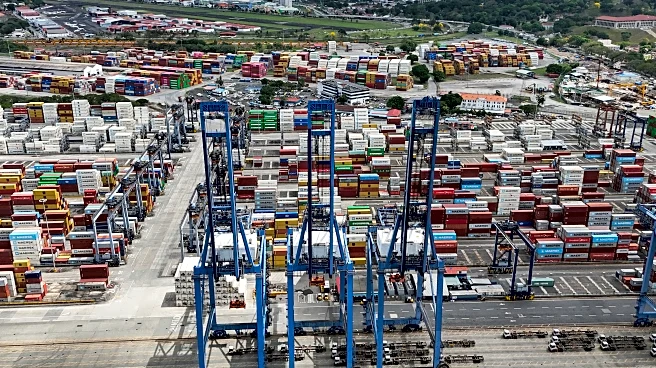
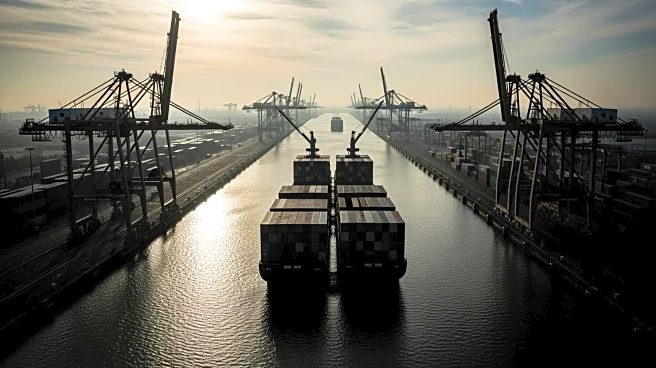
Panama has taken control of two strategic ports at the Panama Canal, previously operated by a Hong Kong-based company, following a Supreme Court ruling that deemed the company's 29-year operating agreement unconstitutional. This move has placed Panama in the middle
of a geopolitical conflict between the United States and China. The ports, which handle nearly 40% of Panama's container traffic and employ 7,000 workers, are critical to global shipping. The U.S. views the situation as a national security concern, while China has threatened economic repercussions. Panama's government has designated new companies to manage the ports temporarily and is preparing to rebid the concession.
Why It's Important?
The seizure of the ports by Panama has significant implications for international trade and geopolitical relations. The Panama Canal is a crucial logistics hub, and control over its ports affects global shipping routes. The U.S. is concerned about national security, given the canal's strategic importance for military and commercial shipping. China's reaction underscores the economic and political stakes involved, as the ports are vital for its trade routes. The situation could lead to increased tensions between the U.S. and China, affecting international diplomacy and economic policies.
What's Next?
Panama is preparing to rebid the port concessions, a process that could take years due to ongoing arbitration proceedings initiated by the Hong Kong company. The outcome will likely influence Panama's economic and diplomatic relations with both the U.S. and China. The U.S. may increase diplomatic efforts to ensure the ports remain under friendly control, while China may seek to protect its economic interests in the region. The situation could lead to further legal and political developments as Panama navigates its position between two superpowers.