



What's Happening?
A severe winter storm is impacting the East Coast, leading to significant travel disruptions and prompting states of emergency in several regions. Over 3,500 flights have been canceled, with New York City's John F. Kennedy International Airport being
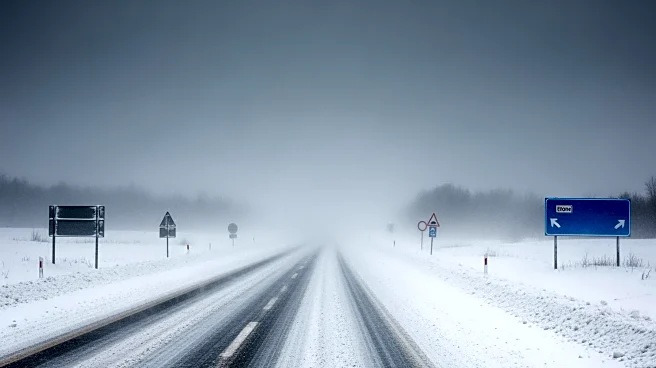
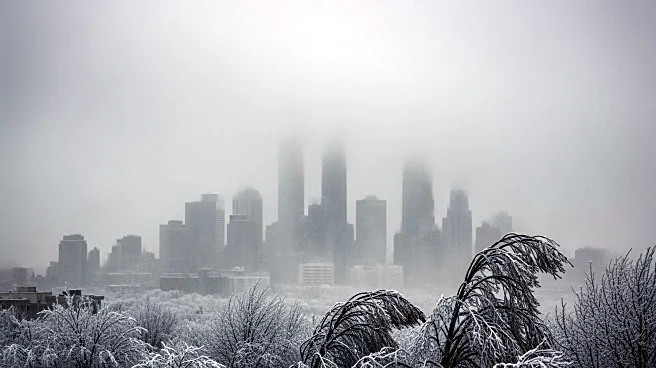
the most affected. The storm is expected to bring heavy snow and strong winds, creating dangerous travel conditions and potential power outages. Blizzard warnings have been issued from Maryland to Massachusetts, with up to 2 feet of snow possible in many areas. The National Weather Service has warned that the storm could cause treacherous whiteout conditions, making travel extremely dangerous. In response, New York City has restricted travel to emergencies only, with streets, highways, and bridges closed from Sunday night to Monday noon.
Why It's Important?
The storm's impact is significant as it affects a densely populated region, disrupting daily life and economic activities. The travel restrictions and flight cancellations could have a ripple effect on the national economy, affecting businesses and supply chains. The potential for power outages poses a risk to public safety and infrastructure, especially in urban areas. The storm also highlights the need for effective emergency management and preparedness in the face of extreme weather events, which are becoming more frequent and severe due to climate change.
What's Next?
As the storm progresses, emergency services and local governments will continue to monitor conditions and provide updates to the public. Efforts to clear snow and restore power will be critical in the aftermath. The response to this storm could influence future policies on infrastructure resilience and climate adaptation. Residents are advised to stay informed through official channels and adhere to safety guidelines to minimize risks.