
What's Happening?
Southern California is bracing for a strong El Niño event, which climate scientists predict will lead to an exceptionally wet winter, potentially exceeding the intensity of past events in 1982 and 1997.
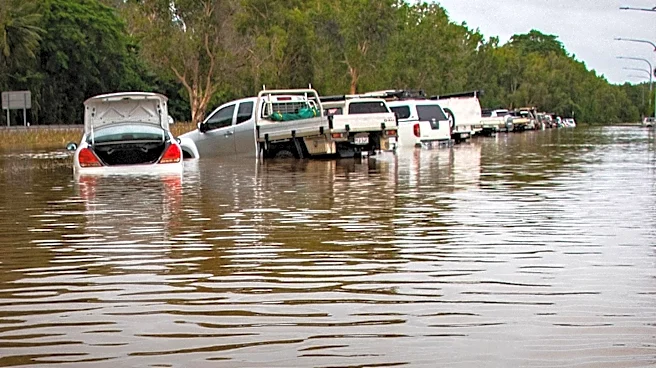
This El Niño is expected to cause extreme rainfall and temporarily raise sea levels due to ocean warming. Compounding this natural phenomenon is human-caused global warming, which has already elevated sea levels by approximately a foot along California's coast over the last century, making normal weather patterns more extreme. Experts, including climate scientist Daniel Swain, warn that the risk of coastal flooding is "very high and almost guaranteed," and inland areas along creeks and rivers are also at significant risk. Residents are urged to understand their personal flood risk and consider obtaining flood insurance, as it can take about a month for new policies to become active.
Why It's Important?
The impending strong El Niño, exacerbated by climate change, poses a significant threat to Southern California, impacting infrastructure, property, and public safety. The potential for billions of dollars in damage and loss of life, as seen in previous strong El Niño years, highlights the economic and social vulnerability of the region. Increased flooding could disrupt transportation, damage homes and businesses, and strain emergency services. For the insurance industry, this event could lead to a surge in claims, potentially affecting premiums and coverage availability in the long term. Furthermore, the event underscores the broader implications of climate change on U.S. coastal communities and the need for robust adaptation strategies, including improved flood mapping and public awareness campaigns. The call for residents to secure flood insurance emphasizes the financial burden individuals may face if unprepared.
What's Next?
Southern California residents are advised to prepare for the upcoming wet season, which officially begins in October. Key actions include assessing personal flood risk using resources like FEMA flood maps, though experts caution these may not be comprehensive for all types of flooding. Obtaining flood insurance is strongly recommended, with a lead time of about a month for policies to activate. Local officials and community leaders will likely continue to issue warnings and provide resources for preparedness, such as sandbag distribution and evacuation plans. Scientists will monitor the El Niño's progression and its interaction with other natural phenomena, such as the "declination of the moon," which will contribute to the highest tides in nearly two decades this winter. Long-term, this event may accelerate discussions and investments in climate resilience infrastructure and updated flood risk assessments.
Beyond the Headlines
The convergence of a strong El Niño and human-caused global warming in Southern California highlights a critical challenge for urban planning and environmental policy. The inadequacy of current flood maps, which often do not account for short, heavy downpours or mudflows in recent burn zones, reveals a gap in understanding and communicating risk. This situation could prompt a re-evaluation of how flood risks are assessed and communicated to the public, potentially leading to more dynamic and comprehensive mapping systems. The low rate of flood insurance adoption (less than 2% in California) also points to a broader societal issue of underestimating natural disaster risks and the financial consequences. This event could serve as a catalyst for policy changes aimed at increasing flood insurance penetration, improving building codes, and investing in natural infrastructure solutions to mitigate the impacts of increasingly extreme weather events driven by climate change.