



What's Happening?
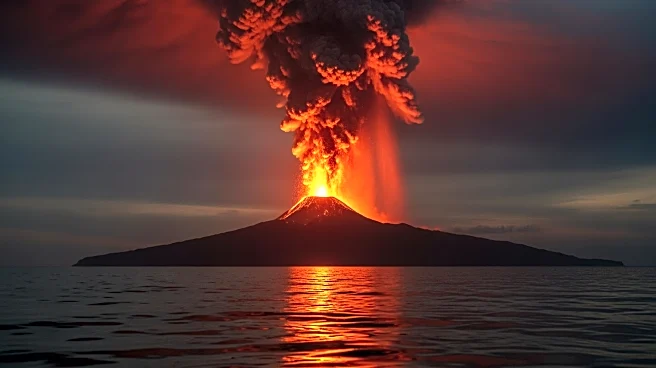
The 1883 eruption of Krakatau, a volcanic island in Indonesia, is recognized as the loudest sound ever recorded. The eruption was heard over 1,900 miles away and created a pressure wave that circled the globe seven times. At 100 miles from the source,
the sound reached an estimated 170 decibels, enough to cause permanent hearing damage. Modern estimates suggest the sound reached about 310 decibels, transforming into shock waves rather than normal sound waves. This event is often compared to other loud historical events, such as the Tunguska meteor explosion, but remains unparalleled in its global impact.
Why It's Important?
The Krakatau eruption's significance lies in its demonstration of the immense power of natural events and their ability to affect the entire planet. The sound's intensity and the resulting shock waves highlight the potential for natural disasters to cause widespread disruption. This event serves as a reminder of the need for global monitoring systems to detect and respond to such occurrences. Additionally, it underscores the importance of understanding natural phenomena to better prepare for future events that could have similar or greater impacts on global communities.