

What's Happening?
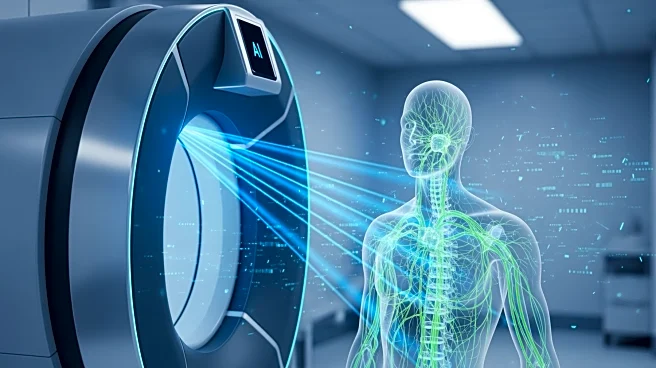
DeepRare, an advanced AI system developed by researchers at Shanghai Jiao Tong University’s School of Artificial Intelligence and Xinhua Hospital, has demonstrated superior performance in diagnosing rare diseases compared to experienced doctors. In a study
published in Nature, DeepRare was able to correctly identify rare conditions on its first suggestion 64.4% of the time, surpassing the 54.6% accuracy rate of human specialists. When allowed three suggestions, the AI's success rate increased to 79%, compared to 66% for doctors. The system integrates 40 specialized tools and follows a reasoned workflow that mimics human diagnostic processes, including forming hypotheses, testing them against patient data, and consulting global medical literature. Since July 2025, DeepRare has been used by over 600 medical institutions worldwide.
Why It's Important?
The development of DeepRare represents a significant advancement in medical diagnostics, particularly for rare diseases that often go undiagnosed due to their complexity and the limited experience of many clinicians. With approximately 300 million people affected by rare diseases globally, the AI system's ability to reduce diagnostic timelines could lead to earlier and more accurate treatments, potentially improving patient outcomes and reducing healthcare costs. The system's integration into medical workflows aims to augment, rather than replace, human clinicians, ensuring that the human element remains central to patient care while leveraging AI's computational strengths.
What's Next?
The research team plans to further validate DeepRare using 20,000 real-world cases and establish a global rare disease diagnostic alliance. This initiative could foster international collaboration in rare disease research and treatment, potentially leading to standardized diagnostic protocols and improved global health outcomes. As the system continues to be adopted by more medical institutions, its impact on the healthcare industry could expand, prompting discussions on the ethical and practical implications of AI in medicine.
Beyond the Headlines
DeepRare's success highlights the potential for AI to transform medical diagnostics, but it also raises questions about the role of technology in healthcare. While the system is designed to support clinicians, its deployment must be carefully managed to ensure that it complements human expertise without undermining the clinician-patient relationship. Additionally, the reliance on AI for critical diagnostic decisions necessitates robust ethical guidelines and oversight to prevent misuse and ensure patient safety.