








What's Happening?
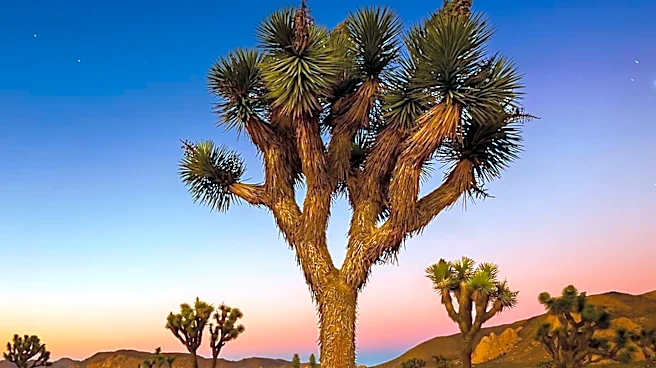
Joshua Tree National Park, situated in southern California, provides a unique blend of desert landscapes and recreational opportunities. The park is accessible from communities like Joshua Tree and Twentynine Palms and encompasses portions of both the Mojave
Desert and the Colorado Desert. These two distinct desert regions vary in elevation and vegetation. The higher elevations within the Mojave Desert are characterized by the park's iconic Joshua trees, while the lower Colorado Desert areas feature sparse shrubs and expansive plains. Visitors to the park can engage in a variety of activities, including hiking, shopping in nearby towns, and enjoying live music events. The park also offers guided tours, allowing visitors to explore its natural beauty, famous Joshua Trees, and distinctive rock formations.
Why It's Important?
Joshua Tree National Park serves as a significant natural and recreational asset in the U.S., attracting tourists and contributing to local economies in southern California. Its unique ecological composition, featuring two distinct desert ecosystems, provides valuable opportunities for environmental education and scientific research into desert flora and fauna. The park's popularity as a destination for hiking, rock climbing, and other outdoor activities supports local businesses in surrounding communities, including hospitality, retail, and guide services. The preservation of such diverse desert environments is crucial for maintaining biodiversity and offering public access to natural landscapes, which can have positive impacts on public health and well-being through outdoor recreation. The park's continued appeal underscores the importance of national parks in the U.S. for both conservation and tourism.
What's Next?
The park is expected to continue offering its range of activities, including hiking, guided tours, and opportunities to enjoy the natural landscape. Future developments may include continued efforts to manage visitor impact and preserve the delicate desert ecosystems. Local communities surrounding the park will likely continue to benefit from tourism, with ongoing opportunities for shopping and live music events. The park's management will focus on balancing visitor access with conservation efforts to ensure the long-term health of its unique plant and animal life, particularly the Joshua trees, which are central to the park's identity. Educational programs and interpretive services are also likely to be maintained or expanded to enhance visitor understanding of the desert environment.
Beyond the Headlines
Beyond its immediate recreational appeal, Joshua Tree National Park represents a critical case study in desert conservation and the challenges posed by climate change. The park's namesake Joshua trees, a keystone species, are particularly vulnerable to changing climate patterns, raising long-term ecological concerns. The park also highlights the cultural significance of natural landscapes, serving as an inspiration for artists, musicians, and writers. The juxtaposition of two distinct desert environments within a single protected area offers a unique opportunity to study ecological transitions and adaptation. Furthermore, the park's popularity underscores broader societal trends towards seeking solace and recreation in nature, emphasizing the psychological and spiritual benefits derived from wilderness experiences. The ongoing management of visitor traffic and resource protection within the park reflects the complex balance between public enjoyment and environmental stewardship.