







What's Happening?
Dr. Thomas Gonzalez Roberts, Assistant Professor at Georgia Tech’s Sam Nunn School of International Affairs and Daniel Guggenheim School of Aerospace Engineering, recently addressed the World Affairs Council of Atlanta on the transformation of space into
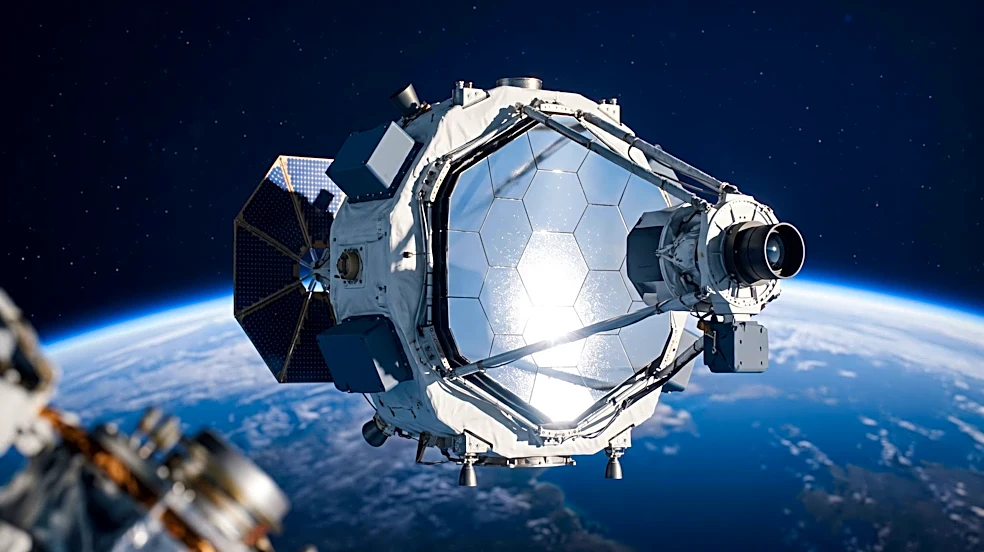
a domain shaped by geopolitics, security, and international governance. During World Space Week, Dr. Roberts highlighted Georgia Tech's leadership in aerospace engineering and space policy, focusing on coordination, sustainability, and security in space through his Engineering Space Policy Lab (ESPL). He described the near-Earth space environment as increasingly congested with tens of thousands of satellites and growing space debris, raising critical questions about sustainable management. A central theme was the inadequacy of Cold War-era treaties, such as the foundational 1967 Outer Space Treaty, to govern modern space activities, which now include GPS, commercial mega-constellations, and private spaceflight companies. The discussion also covered the increasing role of space in national security, the creation of the U.S. Space Force, and the dual-use nature of space assets.
Why It's Important?
The discussion underscores the critical need for updated international frameworks to manage the rapidly evolving space domain. The current legal and governance structures, largely established during the Cold War, are ill-equipped to address the complexities of a crowded and competitive space environment driven by technological advancements and commercialization. This gap creates potential risks for sustainability, security, and equitable access to space resources. The increasing number of satellites and space debris poses a threat of orbital collisions, which could render vital orbital pathways unusable. Furthermore, the growing integration of space assets into national security operations means that vulnerabilities in space governance can have direct implications for terrestrial conflicts and global stability. The insights from Dr. Roberts highlight that the future of space depends not only on technological breakthroughs but also on international cooperation, responsible governance, and effective policy-making to prevent conflict and ensure long-term sustainability.
What's Next?
As humanity continues to launch more satellites, plans to return to the Moon, and contemplates missions to Mars, the issues of space governance, security, and sustainability will become even more pressing. Policymakers face the ongoing challenge of adapting decades-old frameworks to a rapidly changing space economy and geopolitical landscape. This will likely involve increased international dialogues and negotiations to develop new norms, regulations, and treaties that address contemporary challenges such as space traffic management, debris mitigation, resource utilization, and the prevention of weaponization of space. The U.S. Space Force and other national space agencies will continue to develop capabilities to protect space assets and deter adversarial actions, while also seeking to establish responsible counterspace campaigning norms. The academic and research communities, like Georgia Tech's ESPL, will play a crucial role in providing data and analysis to inform these policy decisions and foster international cooperation.
Beyond the Headlines
The evolution of space from a frontier of exploration to a domain of geopolitical competition and commercial exploitation raises profound ethical and legal questions. The concept of 'freedom of exploration' enshrined in the Outer Space Treaty is being challenged by the practical realities of finite orbital resources and the potential for commercial entities to dominate access. The discussion about space debris and sustainability highlights humanity's responsibility to manage this shared environment for future generations, akin to environmental stewardship on Earth. The dual-use nature of space technology—serving both peaceful and military purposes—creates a constant tension between cooperation and competition, demanding careful diplomatic efforts to prevent an arms race in space. Ultimately, the choices nations make today regarding space governance will define not only the future of space exploration and utilization but also the nature of international relations and global security for generations to come, potentially shaping humanity's expansion beyond Earth.