



What's Happening?
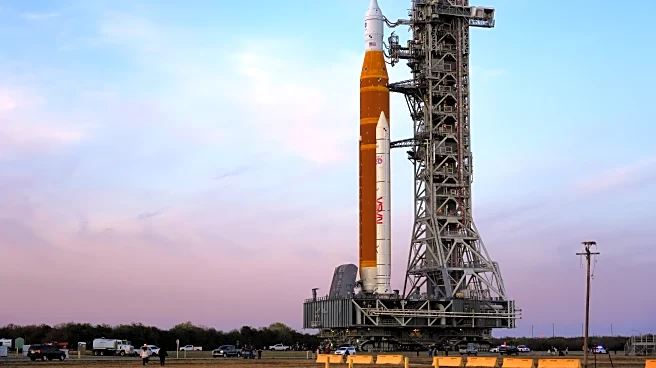
NASA is preparing for the launch of Artemis 2, a mission that will send four astronauts on a 10-day journey around the moon. The mission is scheduled for April 1, 2026, and marks the second flight of the Artemis program, but the first to carry astronauts.
NASA officials, including Lori Glaze and John Honeycutt, have expressed caution in quantifying the risks involved due to limited data. The NASA Office of Inspector General (OIG) has estimated a 1-in-30 risk of failure during a crewed Artemis mission to the lunar surface. Comparatively, the risk for a 210-day commercial crew mission to the International Space Station is 1 in 200. The OIG report also highlights micrometeors and orbital debris as significant risks to human spaceflight.
Why It's Important?
The Artemis 2 mission is a critical step in NASA's efforts to return humans to the moon and eventually establish a sustainable presence there. The mission's success or failure could significantly impact future lunar exploration and NASA's credibility. The high-risk estimates underscore the challenges of human spaceflight and the need for robust safety measures. The mission also involves significant investments from NASA and its partners, including SpaceX and Blue Origin, who are developing crewed moon landers. The outcome of Artemis 2 could influence future funding and international collaboration in space exploration.
What's Next?
NASA is proceeding with preparations for the Artemis 2 launch, with ongoing assessments of potential risks. The agency is likely to continue refining its safety protocols and risk assessments as more data becomes available. The mission's success could pave the way for subsequent Artemis missions, including Artemis 3, which aims to land astronauts on the lunar surface. Stakeholders, including international partners and private companies, will be closely monitoring the mission's progress and outcomes.