





What's Happening?
The Economic Community of West African States (ECOWAS) is holding a three-day regional technical meeting in Abuja, Nigeria, from November 18 to 20, 2026. The purpose of this meeting is to examine and validate the overall architecture and technical specifications
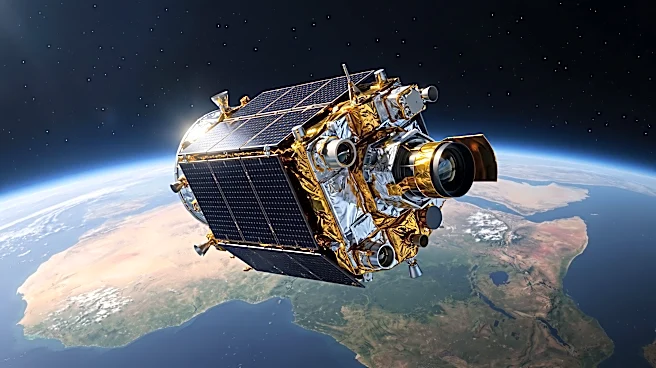
of the ECOWAS Earth Observation Satellite, ECOSAT-1. Experts in space and satellite infrastructure from ECOWAS Member States, representatives from the ECOWAS Commission, and technical specialists from Nigeria’s National Space Research and Development Agency (NASRDA) are attending. The ECOSAT-1 initiative aligns with ECOWAS Vision 2050, aiming to bolster regional technological sovereignty by developing the capacity to generate and access reliable geospatial data. This satellite is intended to assist Member States in addressing critical issues such as epidemiological surveillance, access to health and education, natural resource management, environmental protection, disaster prevention, agricultural development, food security, conflict monitoring, and regional peace and security. Professor Matthew Olumide Adepoju, Director General and Chief Executive of NASRDA, emphasized the importance of regional space capabilities to tackle environmental and security challenges in West Africa, noting the region's dependence on commercial space operators from Europe and the United States for satellite imagery.
Why It's Important?
The ECOSAT-1 project represents a significant step towards technological independence and enhanced regional problem-solving for West African nations. By developing its own Earth observation satellite, ECOWAS aims to reduce its reliance on external commercial operators for critical geospatial data, which can be costly and subject to external control, especially during emergencies. This initiative will empower Member States with direct access to timely and relevant information for various sectors, from disaster management and food security to conflict prevention and public health. For the United States, a more technologically self-sufficient and stable West Africa could lead to reduced humanitarian crises and improved regional governance, potentially fostering stronger economic partnerships and mitigating security risks that could otherwise require international intervention. The project also signifies a growing trend of developing nations investing in space technology for sustainable development.
What's Next?
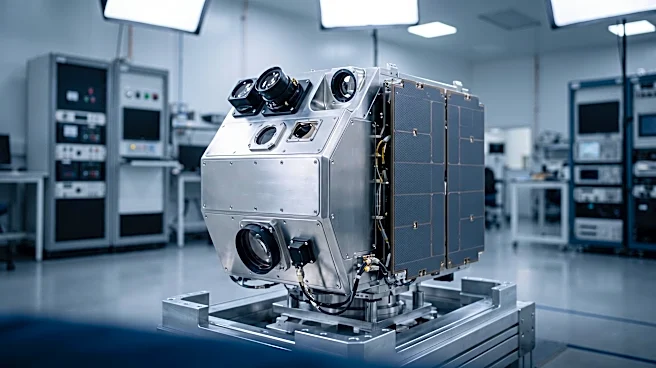
At the conclusion of the three-day meeting, experts are expected to consolidate and technically validate the satellite’s overall architecture and specifications. They will also assess proposed ground station locations, review the 3D prototype, and strengthen the project’s capacity-building, budgetary, and partnership frameworks. The validated technical report will then be submitted to ECOWAS Ministers in charge of Science, Technology and Innovation for their consideration and adoption. This adoption will pave the way for the next phases of the ECOSAT-1 project, including securing necessary funding, establishing partnerships, and proceeding with the satellite's development and launch. The initiative is expected to foster stronger regional cooperation in space science and technology, leading to improved access to strategic geospatial information and enhanced capacity among Member States.
Beyond the Headlines
The ECOSAT-1 project transcends mere technological advancement; it embodies a strategic shift towards greater regional autonomy and self-determination in West Africa. By investing in space technology, ECOWAS is not only addressing immediate practical needs but also building a foundation for future innovation and scientific development within the region. This move could inspire other regional blocs to pursue similar initiatives, fostering a more distributed global capacity for space-based data collection and analysis. Ethically, it raises questions about data sovereignty and how this new capacity will be used to benefit all citizens equitably, particularly in terms of access to information for vulnerable populations. Legally, it will necessitate the development of robust regional frameworks for space governance, data sharing, and intellectual property. Culturally, it could foster a new generation of scientists and engineers within West Africa, shifting perceptions of the region's technological capabilities.