






What's Happening?
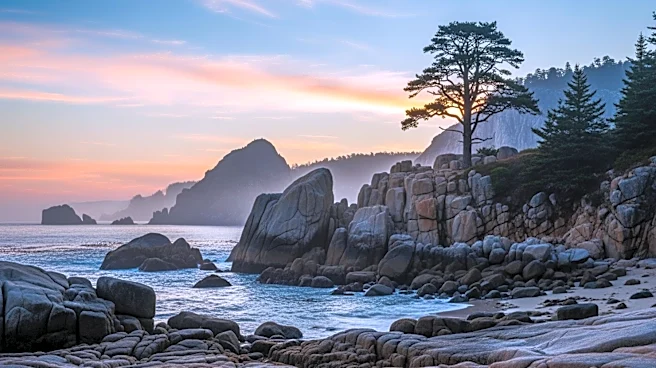
Acadia National Park, located primarily on Mount Desert Island in Maine, continues to be a major attraction for tourists due to its stunning natural beauty and unique ecological features. The park, which was the first national park east of the Mississippi
River, offers a diverse range of landscapes, including granite mountains, seaside cliffs, and over 150 miles of hiking trails. It is also home to a variety of wildlife, including peregrine falcons, whose populations have been successfully restored. The park's historical significance is highlighted by its origins as the ancestral homeland of the Wabanaki people and its establishment as a national park through private land donations. Visitors can explore popular sites such as Cadillac Mountain and the Carroll Homestead, which offers a glimpse into the life of early settlers.
Why It's Important?
Acadia National Park plays a crucial role in preserving both natural and cultural heritage. Its unique position at the intersection of northern and southern climates makes it an ecological hotspot, supporting a wide range of plant and animal species. The park's historical and cultural significance is underscored by its connection to the Wabanaki people and its status as the first national park created from private land donations. Economically, the park is a significant driver of tourism in Maine, attracting millions of visitors annually, which supports local businesses and contributes to the state's economy. The park's management and conservation efforts serve as a model for balancing ecological preservation with public access and enjoyment.
What's Next?
Acadia National Park continues to enhance visitor experiences while focusing on conservation efforts. The park is open year-round, with seasonal closures of certain areas. New initiatives, such as the Acadia Gateway Center, aim to improve visitor services and manage the impact of tourism. The park's management is likely to continue working on balancing visitor access with the preservation of its natural and cultural resources. Future developments may include further restoration projects and initiatives to engage with the local community and indigenous groups to honor the park's historical significance.