



What's Happening?
On September 25, President of Azerbaijan Ilham Aliyev received Prime Minister of Tajikistan Kokhir Rasulzoda. The meeting focused on strengthening bilateral cooperation between the two friendly and brotherly countries. Discussions covered various areas
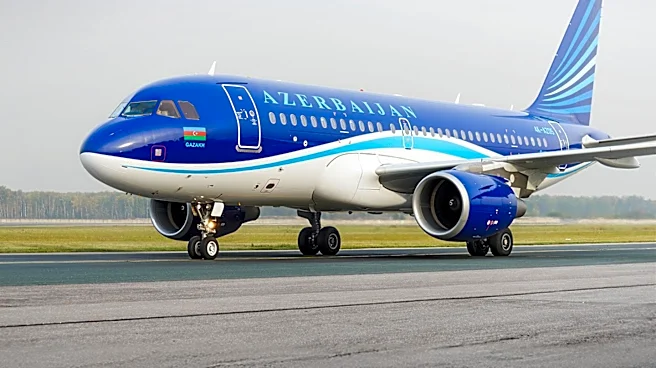
including transport and logistics, economic cooperation, and increasing trade turnover. President Aliyev highlighted the importance of high-level visits in expanding bilateral relations, while Prime Minister Rasulzoda conveyed greetings from President of Tajikistan Emomali Rahmon. The Tajik Prime Minister also expressed interest in implementing Azerbaijan's 'ASAN Khidmet' model in Tajikistan. Both sides emphasized the significant tourism potential of their respective countries and discussed the importance of launching direct flights between Baku and Dushanbe, noting the growth in tourism and passenger transportation. They also underscored the need for organizing various events to showcase their tourism opportunities.
Why It's Important?
This meeting signifies a concerted effort to deepen economic and strategic ties between Azerbaijan and Tajikistan. The focus on transport and logistics, particularly the transit of Tajik goods through Azerbaijan via the Middle Corridor to international markets, could enhance regional trade routes and economic integration. Increased trade turnover would benefit both nations' economies, potentially leading to new business opportunities and job creation. The discussion about direct flights and promoting tourism is crucial for fostering cultural exchange and boosting their respective tourism sectors, which are vital for economic diversification. Tajikistan's interest in Azerbaijan's 'ASAN Khidmet' model suggests a desire to improve public services and governance, potentially leading to more efficient and transparent administrative processes in Tajikistan. This collaboration could also serve as a model for other developing nations in the region.
What's Next?
Following this meeting, both countries are expected to explore concrete steps to implement the discussed initiatives. This includes further negotiations on establishing direct flights between Baku and Dushanbe, which would facilitate both business and leisure travel. Efforts will likely be made to organize joint cultural, humanitarian, and sports events to strengthen historical ties and promote mutual understanding. Tajikistan may also proceed with studying and potentially adopting Azerbaijan's 'ASAN Khidmet' model, which could involve technical assistance and knowledge sharing from Azerbaijan. Furthermore, discussions on cooperation in metallurgy, energy, and agriculture are anticipated to continue, potentially leading to new agreements and joint ventures that could enhance economic output and resource utilization in both countries. The commitment to expanding bilateral relations suggests a sustained diplomatic engagement at various levels.
Beyond the Headlines
The emphasis on strengthening ties between Azerbaijan and Tajikistan extends beyond immediate economic benefits, touching upon broader geopolitical and cultural implications. The Middle Corridor, a key transit route, gains further significance with enhanced cooperation, potentially offering an alternative to traditional East-West trade routes and bolstering regional connectivity. The shared historical and cultural roots highlighted during the meeting underscore a deeper bond that can be leveraged for greater regional stability and cooperation. The allocation of quotas for Tajik students in Azerbaijan also points to a long-term investment in human capital development and educational exchange, fostering future generations of leaders and professionals with a shared understanding. This strategic partnership could contribute to a more integrated and resilient Central Asian and South Caucasus region, promoting peace and prosperity through collaborative development and mutual respect.