
What's Happening?
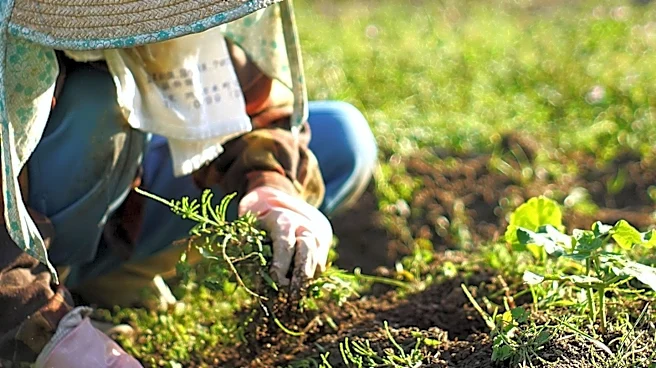
Farmers across the Midwest are increasingly adopting regenerative agriculture practices, driven by a blend of formal agricultural education, Indigenous wisdom, and a growing sense of eco-spirituality.
Reginaldo Haslett-Marroquin, an agronomist and regenerative farmer from Minnesota, has transformed his 63-acre Salvatierra Farms into a model for crop diversity and natural solutions, eschewing herbicides, pesticides, and chemical fertilizers. His approach, which he describes as having 'spiritual integrity,' aims to allow all living things to flourish naturally. Haslett-Marroquin co-founded Tree Range Farms in 2022, a collective of independent poultry producers utilizing regenerative methods, raising organic, free-range chickens under perennial plants like hazelnut and elderberry bushes. This movement is attracting a diverse group, including Lakota tribal members, former large-scale farmers, and Catholic sisters, all motivated by a shared spiritual connection to the land. The trend reflects a broader societal shift, including rising interest in nature-based spirituality, a reevaluation of modern agriculture, climate change concerns, and a focus on health and wellness.
Why It's Important?
This shift towards regenerative agriculture in the Midwest holds significant implications for the U.S. agricultural industry and environmental policy. By moving away from conventional farming practices that rely heavily on chemical inputs, these farmers are contributing to improved soil health, biodiversity, and potentially more sustainable food systems. The integration of spiritual and ethical considerations into farming practices challenges the purely economic motivations that have long dominated industrial agriculture, suggesting a potential paradigm shift in how food is produced and consumed. The involvement of diverse groups, from Indigenous communities to religious organizations, highlights a growing consensus on the importance of land stewardship and its connection to overall well-being. If this movement gains wider traction, it could lead to a reduction in environmental degradation, foster local food economies, and influence agricultural policies to support more holistic and sustainable farming methods, ultimately impacting the health of both the land and the population.
What's Next?
The regenerative agriculture movement, particularly with its spiritual underpinnings, is poised for continued growth and influence. Haslett-Marroquin envisions a global movement that empowers small farmers and restores creation, and he is actively seeking partnerships, including with the Catholic Church, to expand this vision. The Catholic Church's extensive landholdings and its environmental teachings, such as those in the 2015 document Laudato Si, present a significant opportunity for collaboration. Training facilities like Salvatierra Farms and Fields of Sinsinawa, operated by the Catholic Dominican Sisters of Sinsinawa, will likely continue to serve as hubs for educating farmers on innovative agricultural practices. As more farmers, like Josh Payne and Gail Fuller, transition from conventional methods, the demand for resources, support networks, and policy frameworks that favor regenerative approaches is expected to increase. This could lead to further investment in research, development, and outreach for sustainable farming, potentially influencing consumer choices and market demands for ethically and regeneratively produced food.
Beyond the Headlines
The integration of spirituality into regenerative agriculture points to a deeper cultural and ethical re-evaluation of humanity's relationship with nature. This movement transcends mere agricultural techniques, suggesting a fundamental shift in values from dominion over nature to stewardship and interconnectedness. The emphasis on 'spiritual integrity' and the intrinsic value of nature challenges the anthropocentric worldview that has often underpinned industrial development and resource exploitation. This eco-spiritual perspective could foster a more profound sense of responsibility towards the environment, influencing not only farming practices but also broader societal attitudes towards consumption, conservation, and community building. The involvement of Indigenous traditions underscores the importance of ancestral knowledge in addressing contemporary environmental challenges, offering alternative models of living in harmony with the Earth. This holistic approach could lead to a more resilient and equitable food system, where the well-being of the land, animals, and people are inextricably linked and prioritized.