








What's Happening?
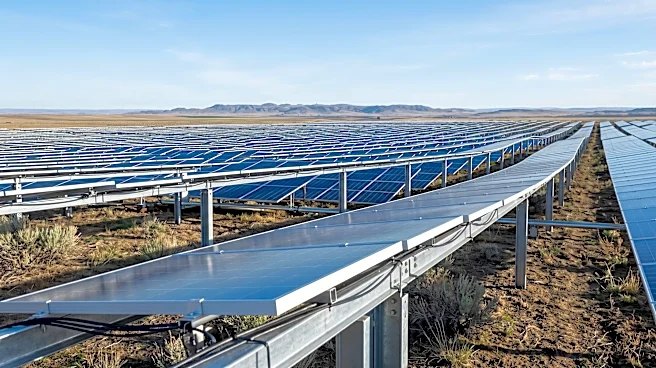
Climate Pledge Arena in Seattle, Washington, has achieved certification as the world's first net zero-certified arena. This 740,000-square-foot building operates entirely on renewable energy. Delaware North, which manages food and beverage services at the arena,
highlights that its 'Climate Collective' initiative offers the most locally focused and sustainable menu in the sports and entertainment industry. The arena serves as the home for the NHL’s Seattle Kraken and the WNBA’s Seattle Storm, and also hosts premier live music and entertainment events, including upcoming concerts by Kacey Musgraves, A Perfect Circle, and Nickelback. The venue's commitment to sustainability extends beyond energy, influencing its operational practices and offerings to patrons.
Why It's Important?
The certification of Climate Pledge Arena as the world's first net zero arena is a significant milestone for the U.S. sports and entertainment industry, setting a new benchmark for sustainable venue operations. This achievement demonstrates that large-scale public venues can operate entirely on renewable energy, challenging conventional assumptions about the environmental impact of such facilities. For the U.S., this could catalyze a broader movement towards green infrastructure in sports and entertainment, influencing future arena designs, renovations, and operational standards nationwide. It showcases a viable model for reducing carbon footprints, promoting energy efficiency, and integrating sustainable practices into high-traffic commercial spaces. The arena's commitment to a locally focused and sustainable menu further extends its environmental leadership, potentially encouraging other venues and food service providers to adopt similar eco-conscious sourcing and waste reduction strategies. This initiative not only benefits the environment but also enhances the public image of the teams and artists associated with the venue, appealing to an increasingly environmentally aware consumer base.
What's Next?
Following its net zero certification, Climate Pledge Arena is expected to continue its role as a leader in sustainable venue operations. The arena will likely serve as a case study and inspiration for other sports and entertainment facilities globally, prompting discussions and initiatives to adopt similar renewable energy and sustainable operational models. Delaware North's 'Climate Collective' will continue to evolve its locally focused and sustainable menu, potentially expanding its offerings and influencing supply chains for large-scale catering. The arena will also continue to host major events, including NHL and WNBA games, as well as concerts by artists like Kacey Musgraves, A Perfect Circle, and Nickelback, all while maintaining its commitment to environmental stewardship. Future developments might include further innovations in waste management, water conservation, and community engagement programs focused on sustainability, solidifying its position as a pioneer in green entertainment infrastructure.
Beyond the Headlines
Climate Pledge Arena's net zero certification transcends its immediate environmental benefits, signaling a profound cultural and economic shift within the U.S. entertainment landscape. This achievement challenges the traditional perception of large venues as significant energy consumers and waste producers, demonstrating that sustainability can be integrated into the core business model without compromising the fan experience. Ethically, it raises the bar for corporate responsibility, pushing other organizations in the sports and entertainment sectors to re-evaluate their environmental impact. Economically, the investment in renewable energy and sustainable practices could lead to long-term operational cost savings and create new market opportunities for green technologies and services. Culturally, the arena's name and mission serve as a constant reminder to attendees about climate action, subtly integrating environmental awareness into popular culture. This could foster a greater public demand for sustainable practices across various industries, ultimately contributing to a more environmentally conscious society.