





What's Happening?
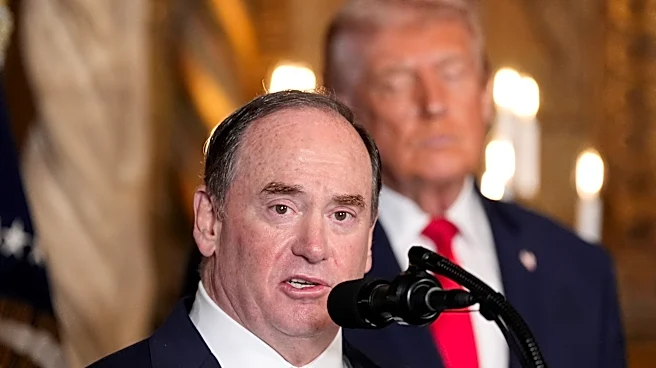
John Phelan, the U.S. Secretary of the Navy, has resigned following tensions with President Trump over the Trump-class battleship program. Phelan, a businessman with no prior military experience, was appointed by Trump to lead the Navy with a focus on shipbuilding.
However, his inability to meet the ambitious timeline for the Trump-class battleships, which Trump had heavily promoted, led to his departure. The battleships, touted by Trump as the most powerful ever, face criticism for being costly and potentially unnecessary. Phelan's suggestion to use European shipyards to meet deadlines clashed with Trump's vision of using American resources, contributing to his resignation.
Why It's Important?
The resignation of John Phelan highlights the challenges of balancing political ambitions with military practicality. The Trump-class battleship program, central to Trump's naval strategy, underscores the administration's focus on expanding military capabilities. However, the program's feasibility is questioned due to high costs and logistical challenges. Phelan's departure may signal potential disruptions in naval operations and shipbuilding plans, affecting defense contractors and military readiness. The situation also reflects broader issues of leadership and decision-making within the administration, impacting U.S. naval strategy and international defense relations.
What's Next?
The next Secretary of the Navy will inherit the task of advancing the Trump-class battleship program amidst ongoing criticism. The new leadership will need to address logistical challenges and align the program with broader naval strategy. Potential strategies include revisiting international collaborations for shipbuilding, as suggested by defense experts. The outcome will influence U.S. naval capabilities and defense industry dynamics. Observers will watch for policy shifts and the administration's response to criticism, which could affect future military procurement and international defense partnerships.