







What's Happening?
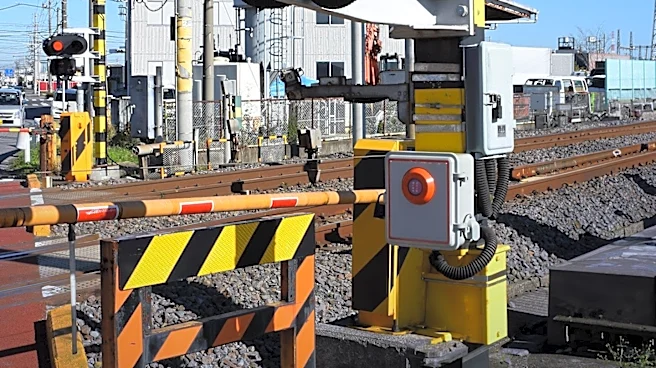
The Federal Railroad Administration (FRA) has selected 91 projects under the Railroad Crossing Elimination/Crossing Safety Program, with 23 of these projects, totaling $431.5 million, specifically designated to support passenger rail corridors. These
funds are allocated for initiatives aimed at enhancing the safety of roads, sidewalks, and trails that intersect with railroad tracks. The investment is expected to bolster existing passenger rail services and facilitate crucial safety improvements and expansion efforts. One notable project is a $56.2 million grant awarded to the Rankin County Board of Supervisors and Waggoner Engineering. This grant will address the at-grade crossing at Highway 18 and the CPKC Meridian Speedway rail line, significantly improving safety near Mississippi's capital.
Why It's Important?
This substantial federal investment is critical for improving the safety and efficiency of passenger rail travel across the United States. By upgrading railroad crossings, the FRA aims to reduce accidents and fatalities, which can have significant human and economic costs. The Rankin County project, for instance, is particularly important as it lays the groundwork for the Interstate 20 Corridor. This expansion will connect central Mississippi, northern Louisiana, and the major metropolitan areas of Atlanta, Georgia, and Dallas-Fort Worth, Texas. Such connectivity is vital for regional economic development, improving access to healthcare services, local businesses, employment centers, and educational institutions, especially along the technology corridor stretching from Meridian, Mississippi, to Monroe, Louisiana. This initiative underscores a broader commitment to modernizing and expanding U.S. rail infrastructure.
What's Next?
The selected projects will proceed with the implementation of safety enhancements at railroad crossings. The successful execution of these projects, particularly the one in Rankin County, is expected to pave the way for the broader development of the Interstate 20 Corridor. This expansion will involve further collaboration between federal agencies and local entities to extend passenger rail services. Continued monitoring and evaluation of these projects will be essential to ensure they meet their safety and operational objectives. The FRA's ongoing commitment to such programs suggests future opportunities for similar grants and infrastructure improvements, potentially leading to a more integrated and safer national rail network.
Beyond the Headlines
Beyond the immediate safety and economic benefits, this investment reflects a strategic shift towards strengthening public transportation infrastructure in the U.S. By prioritizing rail, the government is addressing issues such as traffic congestion, environmental impact (train CO2 emissions are significantly lower than airplanes), and accessibility for various communities. The focus on corridors like the I-20 suggests a long-term vision for connecting major economic hubs and underserved regions, fostering regional growth and potentially reducing reliance on other modes of transport. This could also lead to a cultural shift, encouraging more Americans to consider train travel as a viable and attractive option for both short commutes and long-distance journeys, similar to its prevalence in Europe.