



What's Happening?
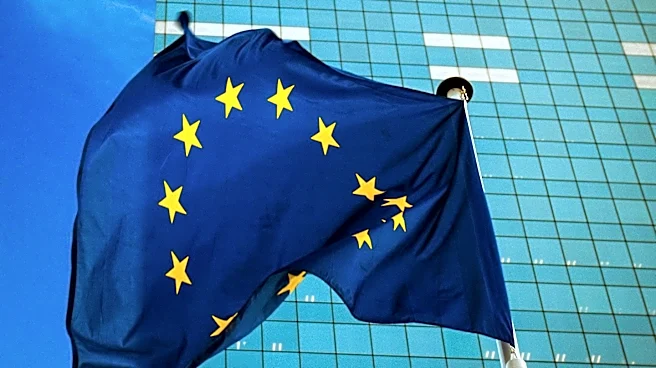
Moldova has officially launched a Joint Consultative Committee between the European Committee of the Regions and the Republic of Moldova in Chișinău. This new bilateral structure aims to provide direct support to local communities in Moldova as they pursue
European integration. The initiative is designed to accelerate the implementation of EU policies and enhance Moldova's capacity to absorb external funds. President Maia Sandu and Deputy Prime Minister for European Integration Cristina Gherasimov have both emphasized that successful integration will be measured by tangible benefits for citizens, such as improved public services, transportation infrastructure, water and sewage systems, and business opportunities. The committee will facilitate the exchange of best practices in local and regional governance and address issues related to implementing the Association Agreement at the local level. It will comprise an equal number of representatives from the European Union and Moldovan local authorities.
Why It's Important?
This development is crucial for Moldova's long-term stability and economic prosperity, aligning its local governance with European standards. By focusing on local-level improvements, the initiative seeks to ensure that the benefits of EU integration are directly felt by Moldovan citizens, thereby building public support for the accession process. Strengthening administrative and fiscal capacities at the local level, along with accelerating the digitalization of public services, is vital for effective utilization of European funds. The committee's role in providing European expertise and experience to Moldovan municipalities will help bridge existing gaps and prepare the country for the complexities of EU membership. This strategic focus on local development is intended to create a more resilient and integrated society, capable of addressing challenges such as rural depopulation and security risks.
What's Next?
Moldova's immediate objective is ambitious: to open all negotiating clusters for EU accession this year and begin closing some of them. A key milestone will be the European Commission's assessment of Moldova's interim benchmarks under Chapters 23 and 24, which cover the judiciary, fundamental rights, and the fight against corruption. If Moldova demonstrates credible and sustained progress in these areas, it could pave the way for opening and closing negotiations in other sectors. The government is also working on a legislative package for administrative reform, including a new administrative-territorial map, with plans to complete regulatory consolidation by the end of September, approximately one year before the 2027 local elections. The Deputy Prime Minister for European Integration, Cristina Gherasimov, has expressed the national ambition to conclude the negotiation process by the end of 2028.
Beyond the Headlines
The establishment of the Joint Consultative Committee underscores a deeper understanding that successful national integration into the EU hinges significantly on local-level preparedness and public engagement. This approach acknowledges that the abstract goals of European integration must translate into concrete improvements in daily life to gain widespread acceptance and sustainability. The emphasis on strengthening local authorities and their capacity to absorb funds highlights a critical challenge for many aspiring EU members: ensuring that reforms are not merely top-down but are effectively implemented and managed at the grassroots. Furthermore, the initiative implicitly addresses the broader geopolitical context, where strengthening democratic institutions and economic ties with the EU serves as a bulwark against external pressures and disinformation, particularly from Russia, which is seen as a significant threat to European stability.