







What's Happening?
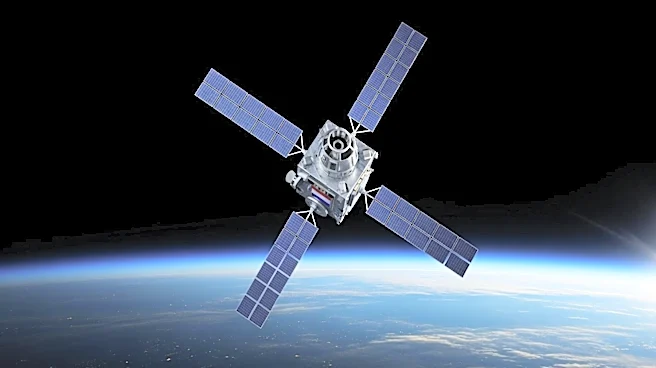
NASA Goddard has issued a Draft Request for Proposal (DRFP) for the development of the Landsat 10 spacecraft, marking a significant step in the continuation of the Landsat program. The proposal outlines the requirements for the design and fabrication
of the satellite bus, integration of the Landsat Instrument Suite, and post-launch operations. Landsat 10 is expected to launch in 2031 and will provide enhanced spectral and spatial capabilities compared to its predecessors, ensuring data continuity for environmental monitoring.
Why It's Important?
The Landsat program is a critical component of global environmental monitoring, providing valuable data for researchers, resource managers, and policymakers. The development of Landsat 10 will enhance the program's capabilities, allowing for more detailed observations of Earth's landmasses and coastal regions. This data is essential for tracking natural and human-induced changes, supporting efforts to address climate change and manage natural resources. The continuation of the Landsat program also underscores the importance of collaboration between NASA and the U.S. Geological Survey in advancing Earth science.
What's Next?
Following the release of the draft proposal, potential offerors have until June 2, 2026, to comment on the solicitation. The final Request for Proposal is expected to be released by the end of June, with proposals due 30 days thereafter. Once a contractor is selected, the development of Landsat 10 will proceed, with a focus on meeting the technical specifications and ensuring a successful launch in 2031. The mission will continue to provide critical data for environmental monitoring and support global efforts to address climate change.