






What's Happening?
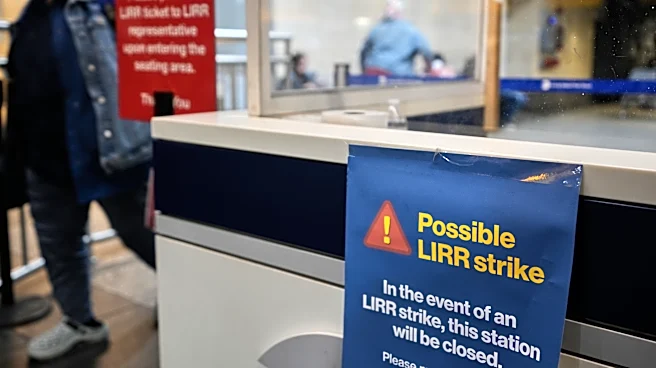
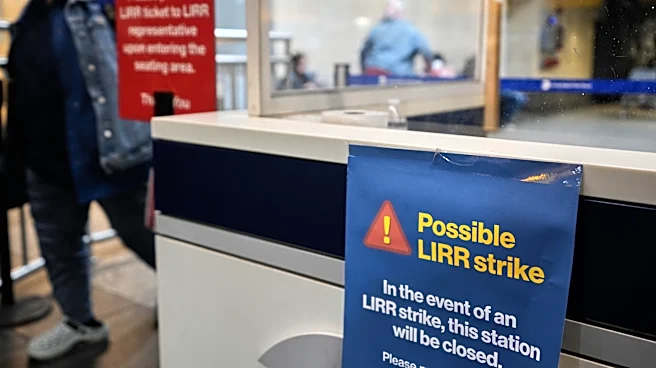
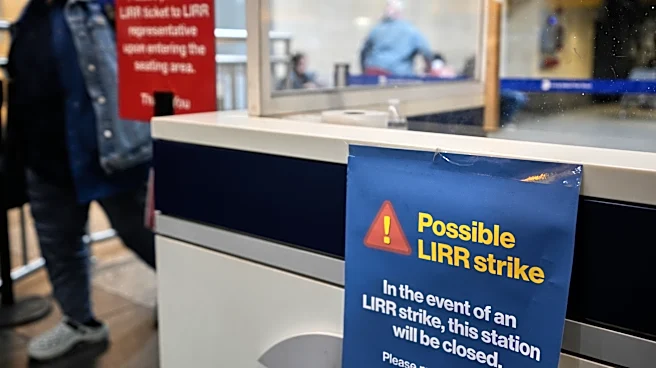
The Long Island Rail Road (LIRR) service has been suspended indefinitely due to a strike by unions following prolonged contract negotiations. This disruption affects commuters traveling between Long Island and New York City, significantly extending travel times.
In response, the Metropolitan Transportation Authority (MTA) is offering free shuttle buses during peak hours from designated LIRR stations to subway stops in Queens. These shuttles operate from 4:30 a.m. to 9 a.m. into the city and from 3 p.m. to 7 p.m. back to Long Island. Additionally, the NICE Bus service in Nassau County provides alternative routes to various points in Queens. The strike also impacts fans attending the Yankees-Mets Subway Series at Citi Field, prompting the Mets to add shuttle services from the Manhasset LIRR station.
Why It's Important?
The LIRR strike poses significant challenges for daily commuters and businesses reliant on the rail service for employee transportation. The disruption could lead to increased traffic congestion and longer commute times, affecting productivity and economic activities in the region. The MTA's shuttle service, while helpful, may not fully compensate for the loss of regular train services, potentially leading to overcrowding and delays. The strike also highlights ongoing labor disputes within the transportation sector, which could influence future negotiations and labor relations. The impact on the Subway Series attendees underscores the broader societal effects of such strikes on public events and leisure activities.
What's Next?
If the strike continues, commuters may need to rely more heavily on alternative transportation options, such as carpooling or using ride-sharing services, which could further strain road infrastructure. The MTA has committed to issuing prorated refunds for May monthly ticket holders for days affected by the strike. Negotiations between the unions and the MTA will likely continue, with potential for resolution if both parties reach a compromise. The outcome of these talks could set precedents for future labor agreements within the transportation sector.