



What's Happening?
Colombian coffee growers are facing significant challenges despite experiencing historic harvests and high global coffee prices. According to The Guardian, severe U.S. tariffs on Brazil and Vietnam, coupled with poor harvests in these countries, have
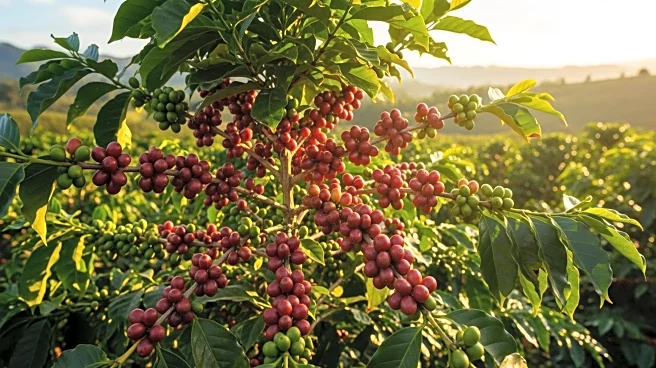
driven up coffee prices. However, Colombian farmers are struggling to hire enough pickers to harvest their crops, leading to some of the produce being left unpicked. The labor shortage is exacerbated by rural abandonment and the allure of better-paying jobs in urban areas.
Why It's Important?
The labor shortage in Colombia's coffee industry highlights the broader issues of rural depopulation and economic disparity. As young workers migrate to cities for better opportunities, traditional agricultural sectors face workforce challenges. This situation threatens the sustainability of Colombia's coffee industry, which is culturally and economically significant. The inability to fully capitalize on high coffee prices due to labor shortages could impact the livelihoods of smallholder farmers and the country's economy.
What's Next?
To address these challenges, Colombian coffee growers may need to explore mechanization and innovation, although these solutions are currently out of reach for many due to high costs. The industry might also consider focusing on specialty coffee markets to increase profitability. Additionally, government and industry stakeholders could play a role in developing strategies to attract and retain rural workers, ensuring the long-term viability of the coffee sector.