



What's Happening?
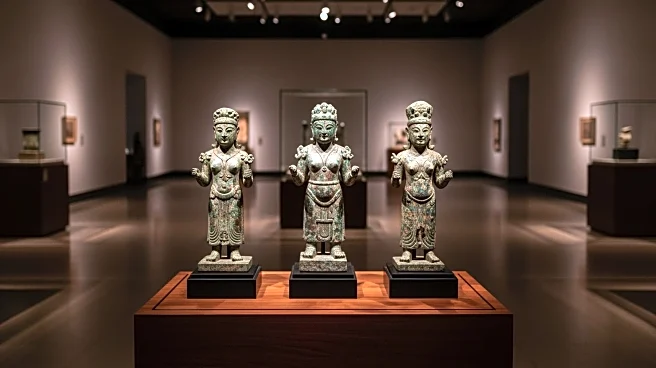
The National Museum of Asian Art (NMAA) in Washington, DC, part of the Smithsonian Institution, has announced the return of three bronze sculptures to India. This decision follows a provenance review that revealed the sculptures were removed illegally
from India. Two of the bronzes date back to the Chola period, around 990 and the 12th century, while the third is from the Vijayanagar period in the 16th century. These artefacts, depicting Hindu figures, were originally used in temple worship and ritual processions. The review was conducted in collaboration with the Photo Archives of the French Institute of Pondicherry, which provided evidence that the bronzes were photographed in temples in Tamil Nadu between 1956 and 1959. The findings were confirmed by India’s Archaeological Survey, which determined the artefacts were taken in violation of national laws.
Why It's Important?
The return of these artefacts is significant as it underscores the growing movement towards the repatriation of cultural property. This action by the NMAA reflects a broader trend among museums to address historical injustices related to the acquisition of cultural artefacts. The decision not only strengthens diplomatic relations between the U.S. and India but also sets a precedent for other institutions holding artefacts of questionable provenance. It highlights the importance of ethical stewardship in the museum sector and the need for transparency in the acquisition processes. This move could encourage other museums to conduct similar reviews, potentially leading to more artefacts being returned to their countries of origin.
What's Next?
The NMAA's decision to return the sculptures may prompt other museums to re-evaluate their collections and provenance policies. The Smithsonian has adopted a new policy allowing each of its museums to tailor provenance considerations to their specific collections. This could lead to further repatriations and a re-examination of the ethical responsibilities of cultural institutions. Additionally, the return of these artefacts may inspire other countries to seek the return of their cultural heritage, potentially leading to international discussions on the legal and ethical frameworks governing cultural property.