



What's Happening?
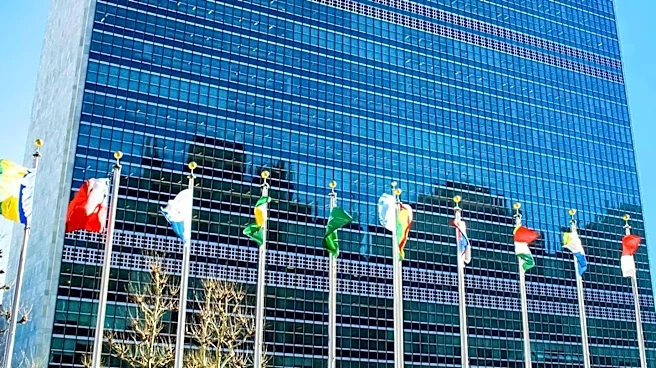
Brazil, India, and South Africa have called for a wide-ranging reform of the UN Charter, specifically advocating for a review conference under Article 109. This initiative, supported by Japan's Prime Minister Sanae Takaichi, aims to address the Charter's
81-year age and the ongoing challenges in global governance. The Article 109 Coalition views such a conference as the most promising path to structural change within the United Nations. While Article 109 allows for a General Conference of all UN members to be convened by a two-thirds vote of the General Assembly and a vote of any nine Security Council members, any recommended changes would require ratification by two-thirds of members, including all five permanent members of the Security Council. This requirement presents a significant hurdle, as any permanent member could ultimately decline to ratify the results, potentially undermining the conference's efforts.
Why It's Important?
The push for a UN Charter review is significant because it highlights a growing dissatisfaction with the current structure and effectiveness of the United Nations, particularly concerning the Security Council's veto power. The inability to reach an agreement on Security Council reform since 2009 underscores the urgency felt by many member states. A review conference, even if it doesn't guarantee Charter amendments, would provide a formal platform for the majority of states to articulate their desired changes and publicly pressure permanent members to justify their positions. This could lead to political commitments, declarations, or new interpretations of existing provisions, potentially raising the political cost of obstruction and fostering greater accountability within the UN system. The involvement of major developing nations like Brazil and India also signals a desire for a more representative global governance structure.
What's Next?
The immediate next step involves diplomatic groundwork to build consensus for convening a review conference under Article 109. While the convening decision itself does not require the assent of all five permanent members, the subsequent ratification process for any proposed amendments does. Member states will need to decide whether to utilize this mechanism provided by the Charter. A careful modalities resolution would be crucial to define the proposed scope of the conference and reaffirm the UN's core purposes and principles, addressing concerns that a conference could reopen existing commitments on human rights and gender equality. The process of preparation and negotiation is expected to take years, indicating a long-term commitment to this reform effort.
Beyond the Headlines
Beyond the immediate procedural aspects, the call for a UN Charter review reflects a deeper global shift in power dynamics and a demand for more inclusive multilateralism. The fact that over 140 of the current 193 UN members were not among the 51 founding states underscores the need for a contemporary voice in shaping the organization's foundational text. This initiative could challenge the traditional power structures within the UN, particularly the entrenched privileges of the permanent Security Council members. While the risk of a conference raising unfulfilled expectations exists, the political value of providing a forum for the wider membership to express its collective will could strengthen the legitimacy and relevance of the UN in addressing complex global challenges, even if formal amendments prove difficult to achieve.