




What's Happening?
The Black Diamond Pool in Yellowstone National Park erupted on Wednesday, sending steam and muddy debris hundreds of feet into the air. This marks the second eruption in a week, with the first occurring on Tuesday. The U.S. Geological Survey (USGS) noted
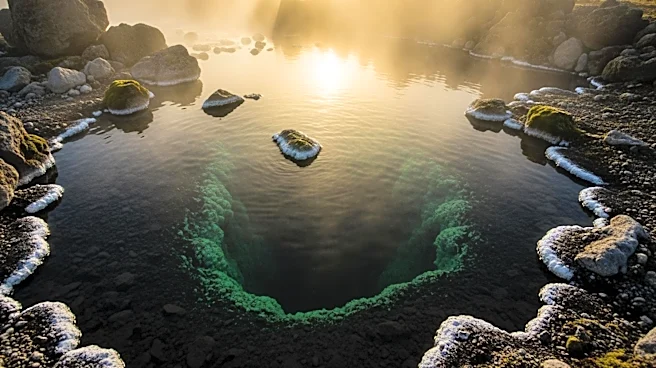
that this could be one of the largest eruptions at the pool since a significant event in 2024. The pool, located in Biscuit Basin, is known for its large, murky blue waters and has a history of sporadic eruptions. The area is surrounded by soft sinter and sparse vegetation, with outflows forming colorful thermophile channels. The pool's average temperature is about 148.5 degrees Fahrenheit, making it a popular tourist attraction.
Why It's Important?
The eruption of the Black Diamond Pool underscores the ongoing hydrothermal activity in Yellowstone, which is a key feature of the park's unique geological landscape. Such events highlight the potential hazards associated with geothermal features, which can pose risks to visitors and infrastructure. The eruptions serve as a reminder of the dynamic nature of Yellowstone's geothermal systems and the importance of monitoring these natural phenomena. Understanding these events is crucial for park management and public safety, as well as for scientific research into geothermal processes.