







What's Happening?
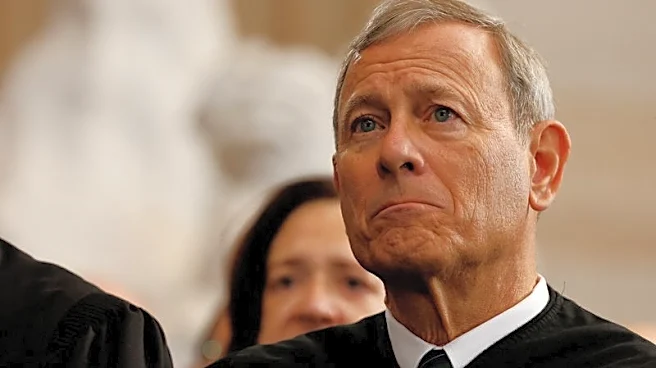
Chief Justice John Roberts recently addressed a conference of judges and lawyers from the 3rd U.S. Circuit in Pennsylvania, where he emphasized that the Supreme Court's decisions are grounded in law rather than political motivations. This statement comes
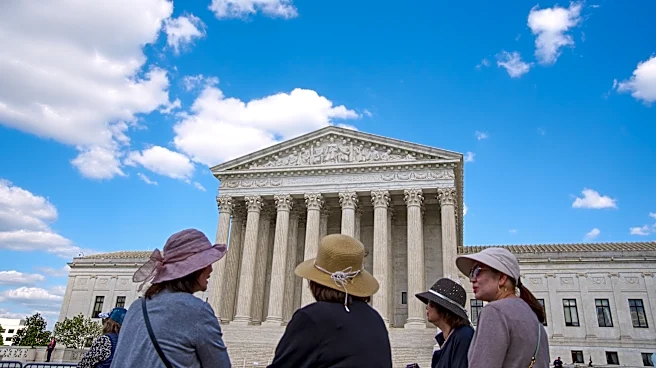
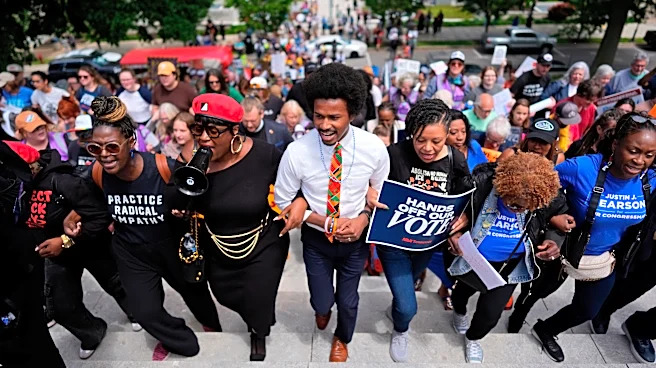
at a time when public confidence in the court is notably low, following several controversial rulings. Roberts highlighted that the public often misconstrues the court's role, perceiving it as a political entity rather than a judicial one. His remarks were made shortly after the court's decision to strike down a majority-Black congressional district in Louisiana, which was deemed an unconstitutional racial gerrymander. This decision has weakened the Voting Rights Act, a pivotal Civil Rights era law, and could potentially facilitate further redistricting that may benefit Republican efforts to control the House. Despite not referencing specific cases, Roberts reiterated that the court is not part of the political process and that its opinions are based on constitutional interpretation.
Why It's Important?
The statements by Chief Justice Roberts are significant as they address the growing public skepticism regarding the Supreme Court's impartiality. The court's recent decisions, including those affecting abortion rights, gun laws, and affirmative action, have sparked widespread debate and criticism, particularly from those who view these rulings as politically charged. By asserting the court's commitment to legal principles, Roberts aims to reinforce the judiciary's independence and counteract perceptions of bias. This is crucial for maintaining the integrity and authority of the judicial system, especially as it faces increasing scrutiny and threats. The implications of these rulings are profound, potentially reshaping the political landscape and affecting minority representation in Congress.
What's Next?
Moving forward, the Supreme Court's decisions will likely continue to be a focal point of public and political discourse. As the court navigates future cases, its rulings will be closely watched for indications of political influence or adherence to legal principles. The potential for further redistricting following the Louisiana decision could lead to significant changes in congressional representation, impacting legislative dynamics. Additionally, the court's stance on controversial issues will remain a critical factor in shaping public opinion and trust in the judiciary. Stakeholders, including political leaders and civil rights organizations, may respond with increased advocacy and legal challenges to address perceived injustices.
Beyond the Headlines
Beyond the immediate legal and political ramifications, the discourse surrounding the Supreme Court's role highlights broader societal questions about the balance of power and the nature of judicial review. The tension between judicial independence and accountability is a recurring theme in democratic governance, and the current climate underscores the need for transparent and principled decision-making. The ethical considerations of judicial conduct and the potential for reforms to enhance public trust are likely to be ongoing topics of discussion. As the court continues to influence pivotal aspects of American life, its ability to maintain legitimacy and public confidence will be essential for upholding the rule of law.