



What's Happening?
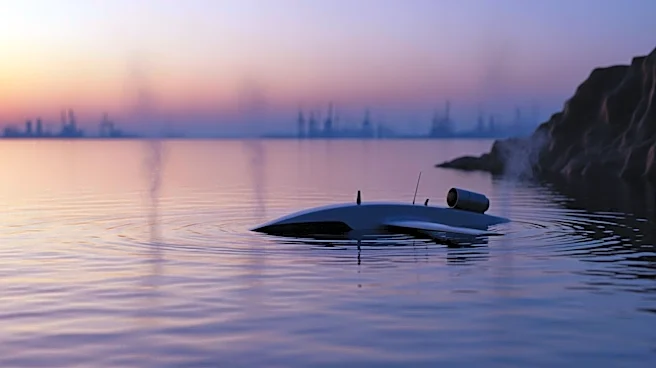
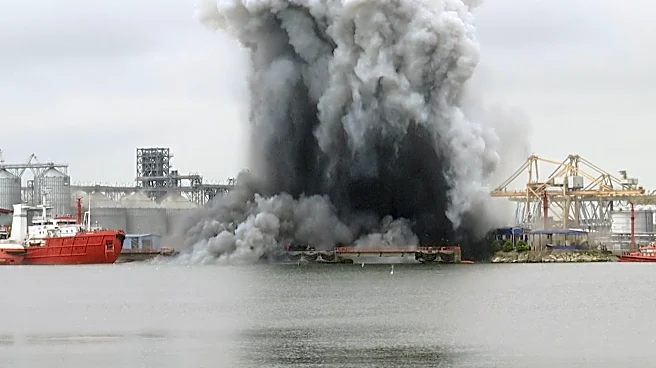
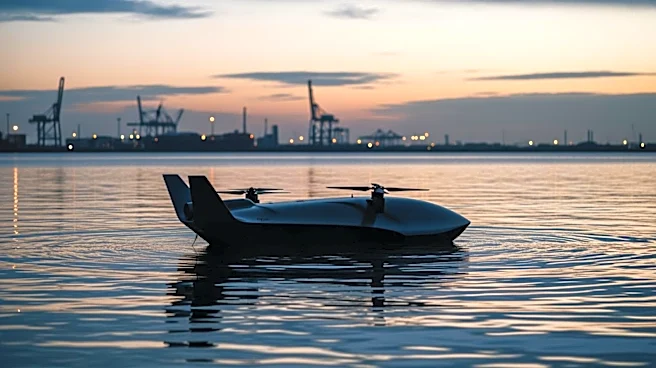
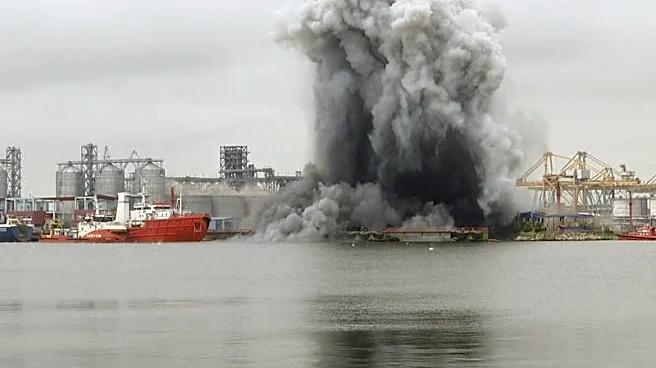
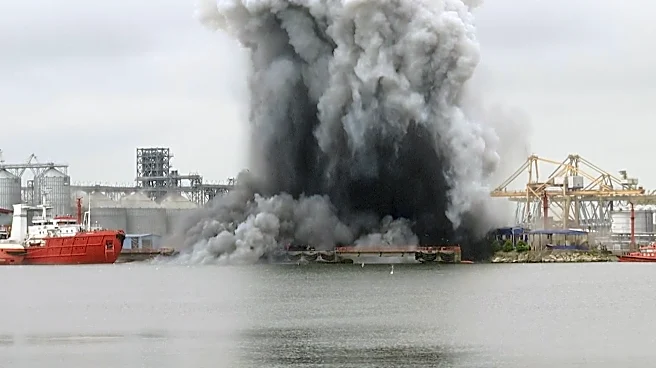
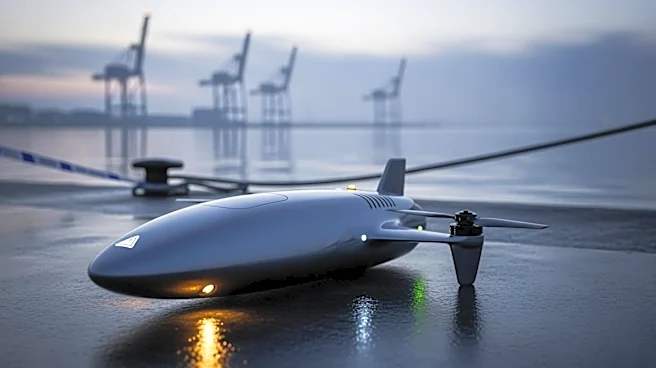
A Ukrainian naval drone, identified as a Sargan-3000, was discovered in the Romanian port of Constanta, entangled in a pollution-control boom. The drone later detonated, sending debris into the air. The origins and how it entered the port remain unclear.
The drone was found near a pier used by search and rescue vessels, opposite a liquid bulk terminal and a grain terminal. Romanian authorities evacuated the area before the self-detonation, preventing casualties. The incident suggests that Sargan-3000 models may have a self-destruct system. Romanian President Nicusor Dan stated that the drone's controls were lost, and Ukrainian sources had notified Romanian counterparts in advance. No significant damage to port infrastructure was reported.
Why It's Important?
The incident highlights the ongoing tensions and security challenges in the Black Sea region, particularly involving Ukraine and Russia. The use of drones in maritime settings underscores the evolving nature of warfare and the potential risks to civilian infrastructure. This event may prompt increased security measures in ports and raise questions about the safety of maritime operations in conflict zones. The situation also reflects the broader geopolitical struggle, with Ukraine defending against Russian aggression and utilizing advanced technology to maintain control over strategic areas.
What's Next?
Romanian authorities may review and enhance port security protocols to prevent similar incidents. The international community could increase scrutiny on the use of drones in conflict zones, potentially leading to discussions on regulations or agreements to manage such technologies. Ukraine's continued use of drones in its defense strategy may influence military tactics and policies in the region. Stakeholders, including NATO and EU members, might engage in diplomatic efforts to address the security implications and support regional stability.
Beyond the Headlines
The incident raises ethical and legal questions about the use of autonomous weapons and their impact on civilian areas. The potential for accidental detonations or miscommunications in high-stakes environments could lead to unintended consequences. This development may also influence public perception of drone technology, balancing its military advantages against the risks to civilian safety. Long-term, the incident could drive innovation in counter-drone technologies and strategies to mitigate such threats.