



What's Happening?
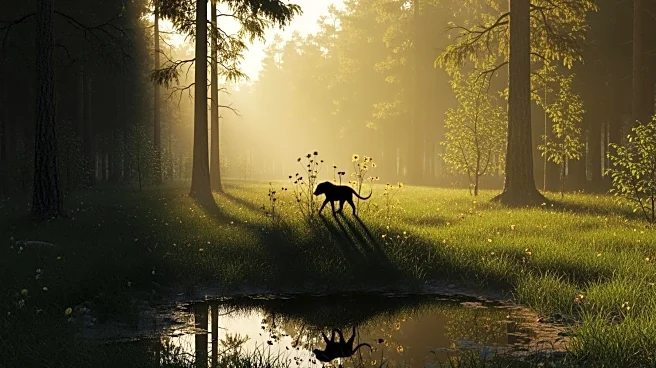
The concept of the 'landscape of fear' describes how the presence of predators can influence the behavior and distribution of prey species, even without direct predation. This idea gained prominence with the reintroduction of wolves to Yellowstone National
Park, where elk populations were affected not just by predation but by the fear of wolves. Research by Liana Zanette and others has shown that fear can significantly impact prey behavior, leading to changes in ecosystem dynamics. For example, in British Columbia, the absence of natural predators like bears and wolves has allowed raccoons to thrive on shorelines, affecting local ecosystems. Experiments have demonstrated that playing predator sounds can alter prey behavior, reducing their presence in certain areas and allowing other species to recover.
Why It's Important?
Understanding the landscape of fear is crucial for comprehending human impacts on ecosystems. The removal of predators by humans can lead to imbalances, as prey species may overpopulate and disrupt local environments. This concept highlights the indirect effects of human actions on wildlife and ecosystems, emphasizing the need for conservation strategies that consider behavioral ecology. The research underscores the importance of predators in maintaining ecological balance and the potential consequences of their absence.
What's Next?
Future research may focus on further exploring the landscape of fear in different ecosystems and its implications for conservation efforts. There may be increased interest in reintroducing predators to areas where they have been extirpated to restore ecological balance. Additionally, understanding the role of fear in ecosystems could inform management practices aimed at mitigating human impacts on wildlife. This knowledge could lead to more effective conservation strategies that account for both direct and indirect interactions between species.
Beyond the Headlines
The landscape of fear concept challenges traditional views of predator-prey dynamics, which often focus solely on direct predation. It highlights the complex interplay between species and the importance of considering behavioral factors in ecological studies. This perspective can lead to a deeper understanding of how ecosystems function and the role of fear in shaping natural environments. It also raises questions about the ethical implications of human interventions in wildlife populations and the need for holistic approaches to conservation.