



What's Happening?
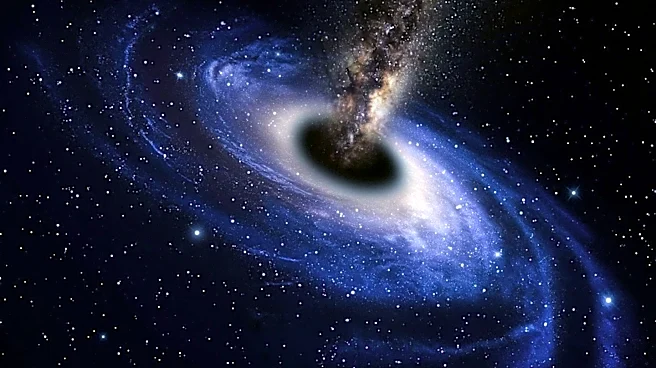
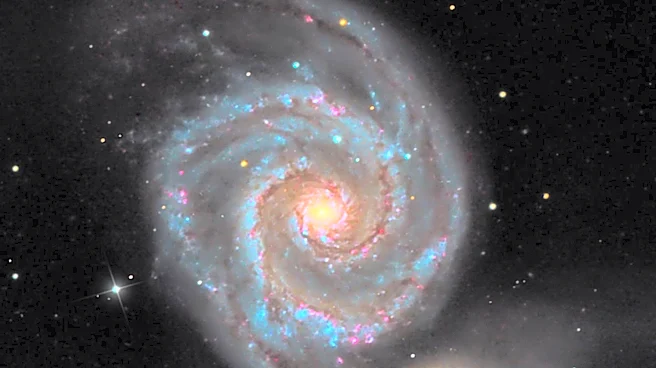
Astronomers from Durham University have discovered that the Milky Way was flipped on its side following a collision with a dwarf galaxy, known as the Gaia Sausage, approximately 10 billion years ago. This cataclysmic event resulted in the absorption of
the dwarf galaxy's stars and a dramatic reorientation of the Milky Way's disc. The findings were derived from supercomputer simulations and observations from the European Space Agency's Gaia mission. The collision is recognized as a defining event in the Milky Way's history, reshaping the galaxy and influencing its current structure.
Why It's Important?
The discovery provides significant insights into the formation and evolution of the Milky Way, enhancing our understanding of galactic dynamics and history. It highlights the impact of cosmic collisions on galaxy structure and evolution, offering a glimpse into the processes that shape the universe. This research contributes to the broader field of astronomy by elucidating the complex interactions between galaxies and the long-term effects of such events on galactic morphology.
What's Next?
Further research will focus on understanding the long-term implications of the Milky Way's collision with the Gaia Sausage and its influence on the galaxy's current structure. Astronomers will continue to study the Milky Way's history and its interactions with other galaxies to gain deeper insights into galactic evolution. Upcoming observations and simulations may reveal additional details about past and future cosmic events that could shape the Milky Way.