



What's Happening?
A new initiative led by MIGAL, the Galilee Research Institute, and GrowingIL is transforming Israel's agricultural landscape by addressing the 'adoption barrier' that hinders farmers from utilizing advanced technologies. The program, known as RegenUp,
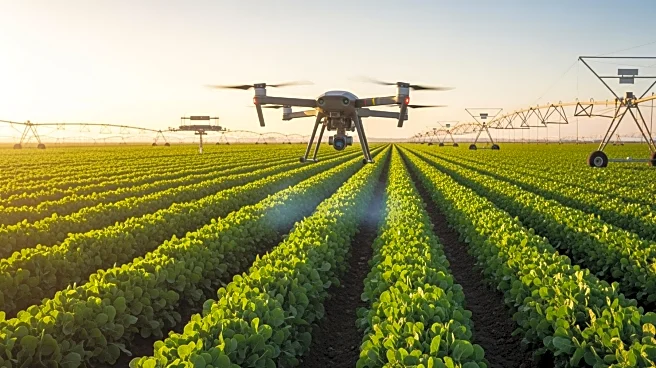
was established in 2024 amidst regional conflict to support northern Israeli farmers. It integrates cutting-edge technology with practical farming needs, involving farmers directly in the development and implementation process. This approach has led to significant advancements, such as AI-powered robots for precise weeding and satellite monitoring for soil management. The success of this model has attracted international interest, with a delegation recently presenting it to American farming organizations in St. Louis, Missouri.
Why It's Important?
The initiative is crucial as it not only enhances farm productivity and sustainability but also positions Israel as a leader in agri-tech innovation. By effectively bridging the gap between laboratory developments and field application, the program ensures that technological advancements translate into real-world benefits. This model could serve as a blueprint for other countries facing similar challenges, potentially revolutionizing global agricultural practices. The involvement of farmers as active partners ensures that the solutions are practical and economically viable, promoting widespread adoption and long-term agricultural resilience.
What's Next?
The program is set to expand, with plans to include more farmers and further refine the technologies in use. This expansion aims to solidify the Galilee as a global hub for agricultural innovation. As the initiative grows, it is expected to foster stronger international collaborations and attract more investment into the region. The continued success of this model could lead to its adoption in other countries, further enhancing global food security and environmental sustainability.
Beyond the Headlines
The initiative highlights the importance of collaborative approaches in overcoming technological adoption barriers. By embedding knowledge and innovation within the farming community, the program not only improves current agricultural practices but also ensures the preservation of soil health for future generations. This focus on regenerative agriculture aligns with global efforts to combat climate change and promote sustainable development.