

What's Happening?
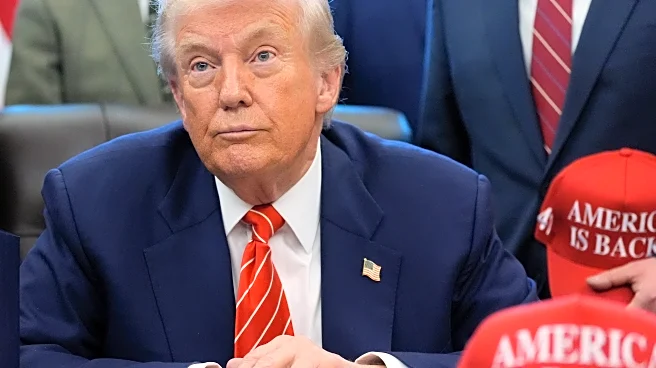
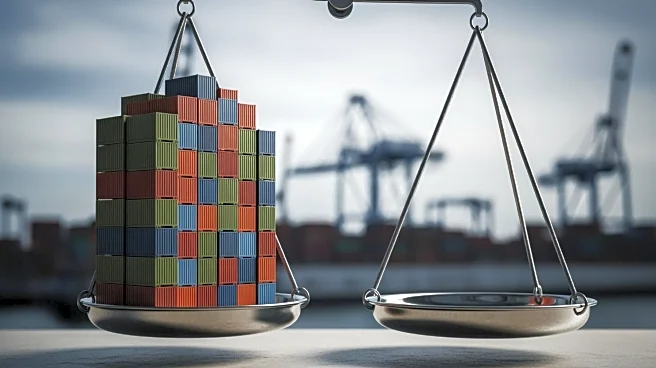
President Donald Trump has announced an increase in tariffs on South Korean imports from 15% to 25%, citing the South Korean National Assembly's failure to approve a trade framework agreed upon last year. The tariffs will affect a range of products, including
automobiles, lumber, and pharmaceuticals. This decision is part of Trump's broader strategy of using tariffs as leverage in trade negotiations. The trade agreement, which included a $350 billion investment pledge from South Korea, has been stalled due to legislative inaction. South Korea's presidential office has stated that it has not been officially informed of the tariff hike and plans to engage in talks with U.S. officials.
Why It's Important?
The tariff increase underscores ongoing trade tensions between the U.S. and South Korea, with potential repercussions for both economies. For U.S. consumers and businesses, the higher tariffs could lead to increased prices for imported goods, affecting sectors reliant on South Korean products. The decision also reflects the challenges of international trade negotiations and the complexities of securing legislative approval in partner countries. The move may strain diplomatic relations and could influence global trade dynamics, as other nations observe the U.S.'s approach to enforcing trade commitments.
What's Next?
South Korea is expected to seek discussions with the U.S. to address the tariff issue, with the South Korean Industry Minister planning to visit the U.S. for talks. The U.S. Supreme Court is also considering the legality of Trump's tariff authority, which could impact future trade policy decisions. The outcome of these discussions and legal proceedings will be crucial in shaping the future of U.S.-South Korea trade relations and the broader international trade landscape.