




What's Happening?
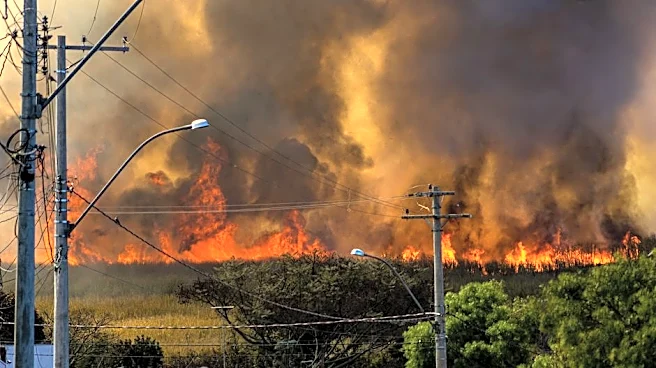
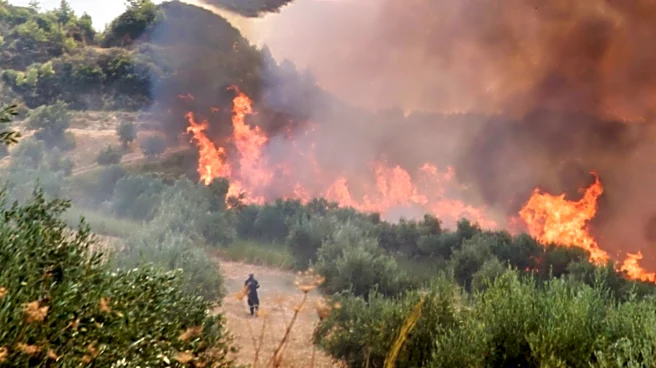
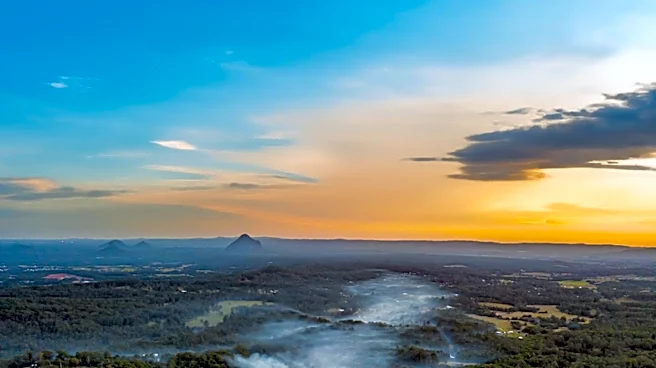
Oregon is experiencing a record-breaking wildfire season, with the Wrights Spring Fire near Chiloquin expanding to 46,767 acres as of August 10. The fire, which began on August 5, remains uncontained, prompting the invocation of the Emergency Conflagration
Act. Firefighting efforts are focused on protecting structures and preventing the fire from spreading further east. The state has seen a total of 2.3 million acres burned, the highest in modern record-keeping. Other significant fires include the Grasshopper Fire near Mount Hood and the Big Grass Fire on the Oregon-Idaho state line. The fires have led to numerous road and recreation site closures, impacting local communities and air quality.
Why It's Important?
The scale of the wildfires in Oregon underscores the increasing challenges posed by climate change, with hotter and drier conditions contributing to more intense fire seasons. The fires have significant implications for public safety, environmental health, and the state's economy. They threaten homes, infrastructure, and natural resources, while also affecting air quality across the region. The ongoing fires highlight the need for effective wildfire management strategies and climate adaptation measures. The situation also raises concerns about the capacity of firefighting resources to manage such large-scale incidents, emphasizing the importance of federal and state collaboration in disaster response.
What's Next?
Firefighting crews will continue efforts to contain the Wrights Spring Fire and other active blazes, with a focus on protecting communities and critical infrastructure. Weather conditions, including wind patterns and humidity levels, will play a crucial role in the fires' progression. Authorities are likely to maintain or adjust evacuation orders as needed to ensure public safety. In the longer term, the state may need to reassess its wildfire preparedness and response strategies, potentially increasing investments in fire prevention and mitigation efforts. The fires also serve as a reminder of the broader need for climate action to address the root causes of increasingly severe fire seasons.